The animation industry’s flaws are well-known; archaic formats pressure creators whose works are further diluted by production committees with financial incentives. They invest in safety while sacrificing quality with notoriously spartan scheduling. Animators are paid pennies and are overworked — sometimes fatally — on their labor-heavy jobs. The business runs largely on passion, but I wonder: how often creators are doing what they love?
Short animation breaks free from those commercial shackles. The unadulterated creativity compensates for its innate limited narrative range. In fact, time constraints are often strengths for idiosyncratic creators whose ideas are unfeasible in longer formats. An expanding market spurred by an increased level of access allowed many animators with unique voices to flourish. Standing out individually has become harder than ever, but that competition means there’s no shortage of amazing animation waiting to be uncovered on goldmines like YouTube and Vimeo. Animation is at its purest when there’s no reason for compromise and I hope It’s Bunsnax can help you find a way into these bite-sized adventures!
Yuki (Kana Hanazawa) gets caught up in a fight between two teenage boys who can control alien creatures.
Cencoroll 2009 studio Think Corporation (Japan) dir. Atsuya Uki Adapted from the award-winning one shot Amon Game by Uki 27 minutes
The most famous one-man anime project goes by the name of Cencoroll. With financial backing from the now-defunct Anime Innovation Tokyo, Atsuya Uki managed to adapt his award-winning one-shot Amon Game all by himself. Cencoroll is a bright example of independent animation’s strengths: all of its 27 minutes is one artist’s uncompromised vision, from its enigmatic worldbuilding to an iconic flat visual style.
Cencoroll‘s setting raises many questions, and it might frustrate viewers how little the 27-minute movie answers. The film’s sparse sound direction and plain character designs exude a sense of normalcy which sometimes feels detached from the alien spectacle. The main cast’s muted — yet detailed — performances keep it grounded as to immerse the viewer better into the worldbuilding. The homely atmosphere paired with Uki’s meticulous background art are captivating, and once the viewer is fully eased in is when Cencoroll starts violently morphing.
It’s remarkable how Atsuya Uki adapts and reaps the benefits of animation without sacrificing his strengths as an illustrator. Amon Game struggled to convey motion with its chaotic panels, but anime’s larger canvas keeps movement understandable in ambitious compositions. Despite Uki’s inexperience, he has a strong sense for pretty shots and makes sure to incorporate lots of objects in the background to always convey scale. While Cencoroll confidently lingers in its backdrops, it has no trouble exploding into animation. They are fierce bursts; like the alien creatures’ fluid morphing or flying debris after one of many violent impacts.
Cencoroll‘s tremendous success caused Atsuya Uki’s popularity to soar, to the detriment of the sequel’s production. Animating an entire painstakingly detailed short-length film was already a herculean task, but now he had to juggle other responsibilities along with it. It wasn’t until after Cencoroll‘s ten-year anniversary that its sequel was released in a joint screening aptly titled Cencoroll Connect.
It’s easy to see why part two took that long to materialize. Uki still doesn’t cut corners or sacrifice frames to what isn’t directly his vision. In fact, he ambitiously doubles down in Cencoroll 2‘s 48-minute runtime. The sequel takes a longer time fleshing out its narrative and increases the mystery by introducing new characters, each with their own controllable alien. Cencoroll Connect‘s epilogue announced a much-needed part three whose ten-second preview already raises new questions. Hopefully, it doesn’t take another ten years before I can cover that installment; I can’t wait to reside in the beauty of Atsuya Uki’s flat world once again.
Hinata (Anju Inami) falls in love with his classmate Shigure (Saori Hayami). On the day she moves to another town, Hinata chases after her to tell his true feelings.
Hinata no Aoshigure (Rain in the Sunshine) 2013 studio Colorido (Japan) dir. Hiroyasu Ishida (Penguin Highway, Poretto no Isu) 18 minutes
It took only a decade for studio Colorido to evolve into a powerhouse. Producer Hideo Uda founded the studio without a particular artistic vision, instead focusing on its business ventures. Uda figured that if he shielded his employees from bad industry practices, eventually their creativity would develop Colorido’s identity. And they did! Newcomer Hiroyasu “tete” Ishida, who gained popularity in 2009 with Fumiko’s Confession, quickly became the leading director because of his imaginative vision and all-round skillset. His talents were bolstered by Yojiro Arai, who blossomed into an incredible background artist during his tenure at Ghibli. That tag team was responsible for Colorido’s co-debut: Hinata no Aoshigure, localized as Rain in the Sunshine, whose style indicates what the studio came to be.
Colorido differentiate themselves by digitizing nearly every step of their production. Their time-efficient processes free up resources poured into character movement, which is necessary for Hinata no Aoshigure‘s motion heavy storyboards. Ishida benefits greatly from digital developments: he thrives in 3D spaces with his crazy dynamic camerawork and he uses loads of CG objects to create rich compositions when needed.
Hinata no Aoshigure is cheerful with Haruko Nobori’s coloring and silly character acting through which it develops its cast. Hinata is in perpetual motion through his facial expressions, hair flowing in the wind, or by stumbling literally head over heels for Shigure. Ishida taps further into the movie’s joviality by connecting the visuals to Hinata’s feelings: he finds peace through drawing, his comfort zones turn gloomy with him, and in his mind he’s flying after a train on a big swan when really he’s chasing a car on foot. Soaring through the skies and backed to a power-pop soundtrack, Hinata conjures an entire world filled with organic elements that contrast his reality: birds versus vehicles and vegetation on asphalt. While Ishida’s photography suggests Hinata’s imagination is greater than the movie can present, it’s still memorable because its landmarks like the helipad building or train ramp are used for great setpieces. Even the lamppost Hinata walks into is integral in creating that immersive space.
Technical jargon aside, ‘feeling’ is ultimately the most important factor in anime and Hinata no Aoshigure has got that in spades. It feels like an adaptation of a happy picture book, yet is crafted perfectly for its medium. The visuals and story are reminiscent of Ghibli, but charming enough to not feel derivative. It’s a self-celebratory 18 minutes wherein an artist overcomes obstacles by drawing strength from the world he conjures. Hinata no Aoshigure simply radiates a passion true to the studio’s founding philosophy: Colorido has become a place where creators make what they love.
SpongeBob and his nakamas battle a blubbered foe as the fate of the secret formula hangs in the balance.
SpongeBob Anime Ep1: Bubble Bass Arc 2020 Newgrounds (United States) dir. Narmak 15 minutes Watch on YouTube or Newgrounds
A clever parody was born amidst the heightening popularity of SpongeBob memes and anime. In 2017 independent animator Narmak caught lightning in a bottle by crossing Bikini Bottom’s iconic denizens through an overly serious shounen lens. Despite SpongeBob OP1‘s brevity and rough edges it became a hit all over social media, now sitting at 18 million views on YouTube.
Narmak returned three years later with a full fledged and massively improved 15-minute episode. Bubble Bass Arcis a testament to his artistic growth, especially comparing it to his previous outings. His older openings are novel proof-of-concepts that struggle honing in on their fragmented ideas, contrary to the concise OP3 included in this episode. Narmak paces himself better with his increasingly dynamic editing. These tighter storyboards replaced slowly panning head shots with fighting cuts and other movement while blazing through the character cast and their respective juxtapositions. It’s a near professionally refined opening that succeeds in feeling like part of a larger series.
Bubble Bass Arc is a labor of love. It’s entirely solo-animated and not without shortcomings, but Narmak is evidently a studious director. He grasps the essence of iconic layouts and creatively strings them together into confident storyboards. By recycling commonplace shounen settings the viewer doesn’t need to familiarize themselves, which gives the script greater leeway to reimagine SpongeBob’s characters and gags. The first half is especially rife with hilarious recontextualizations: Squidwards‘ pessimism here is an inferiority complex to foil SpongeBob’s protagonism, whereas Mr. Krabs is a secretive mentor past his best days opposing typical shounen main character naivete. Sandy and Patrick get little screen time but still fulfill side cast archetypes without straying far from the original series’ intentions. Bubble Bass Arc continuously takes those clever angles to successfully parody SpongeBob, and steadily distills nearly every shounen trope along the way. Perhaps it exhausts too much inspiration here to make an additional episode worthwhile, but Bubble Bass Arc stands on its own legs as an exemplary way to conduct a parody.
Bunnies violently slaughtering bunnies.
The Bunnykill series 2005-2011 Newgrounds (United States) dir. Juuso “Mottis” Andelin 68 minutes in total Watch on Newgrounds
For my first Its Bunsnax article, I have to pay respects to a childhood classic. Bunnykillis a series of Flash animations about bunnies slicing and exploding through waves of generic enemies, a concept Mottis admits he owes to fellow Newgrounds hit Madness. Bunnykill differentiates itself from its inspiration with cutesy bunny designs and vibrant coloring, which always makes it easier and more enjoyable to parse the dense action scenes. Its style remained consistent through the years, but there is very noticeable creative growth over each installment. While the original was just a homage, by part four Bunnykill had grown into its own as more varied setpieces came into play, and the action choreography became increasingly elaborate. Each entry is more dynamic than the last, with so much happening across the screen that it necessitates rewatching. That is no punishment: Bunnykill managed to stay amusingly ‘badass’ through its run despite being so edgy you could cut yourself on it. Unfortunately, Mottis hasn’t uploaded since the 2011 finale and formally announced his animation retirement this year, admitting Bunnykill has become incompatible with his personal life. It’s a shame we won’t witness another leap in quality for this constantly evolving series, but Mottis can look back proudly on the 7 million views he amassed.
Short film by avant-garde artist Keita Kurosaka.
Mochibei 2005 independent (Japan) dir. Keita Kurosaka (Agitated Screams of Maggots, My Face) 1 minute Watch on YouTube
Mochibei (“Fatass“) has always dangled at the deep depths of anime rating sites. Its reputation as a ‘shock film’ is unsurprising, given how abrasive and viscerally disgusting it is. However, Mochibei’s unpleasant nature is not some sick joke, but instead an insight into the suffering of someone with body dysmorphia. Our point of view is like that of a mirror as we face a disfigured and disturbed entity yelling curses while banging their head against the camera. No matter how much they change or cry, Mochibei finds their face so unbearably ugly it drives them to suicide. It’s a deeply unsettling one minute movie which you’ll probably hate, but that’s exactly what Mochibei wants you to feel.
We have this one glorious season left before we fully start noticing the havoc COVID-19 has wreaked upon the already desperately tight anime industry. Thankfully, it temporarily goes out in a blaze of absolute glory with one of the more stacked seasons in recent memory. As much a blessing as a curse; such barrages of exciting projects forces me to choose and sideline many honorable mentions that would’ve made it in weaker seasons.
There’s the overabundance of popular sequels: Kaguya-sama: Love is War?, Fruits Basket, andAscendance of a Bookworm all receiving their sophomore entry. There’s also the fifthShokugeki no Souma season by J.C. Staff, whose dedication to fully adapt a manga that had soured years ago draws some of my misplaced admiration. Finish what you started, I guess. Finality we won’t get in the long-awaited Neon Genesis Evangelion‘s Rebuild series, looking to be delayed yet again.
As are practically all other theatrical releases — big bummer for Heaven’s Feel fans — but I’m disappointed having to wait longer for Nakitai Watashi wa Neko wo Kaburu; written by Mari Okada and directed by Junichi Satou (Sailor Moon). Although romantic melodramas aren’t up my alley, I was excited for studio Colorido’s ambitious visual style they’ve rapidly defined themselves with. There is also Omoi, Omoware, Furi, Furare, adapting Io Sakisaka (Ao Haru Ride)’s dramatic shoujo romance. Not my thing per se, but would’ve loved to see A-1 Picture’s strengths on the big canvas.
And my god, there’s so much more. Yesterday wo Uttate, a 90s seinen manga adaptation and a director’s passion project tackling heavier themes like self-loathing and post-graduation blues. Mewkledreamy, a sugary mahou shoujo about selling cutesy plushies, finally picked up by a subgroup. LISTENERS sees Dai Satou and Hiroaki Ando collaborating for an apparent hate-it-or-love it affair, tapping into early-00s aesthetics and drawing comparisons to Eureka Seven and FLCL. Hiroaki Samura receives his second adaptation in a short while with Nami yo Kiitekure; whose explosive pilot has impressed many friends. There’s Shadowverse adapting the titular mobile collectible card game. Arte, a joyous series about becoming an artist in 16th century Florence. And Gleipnir…
But now for the real meat of the article, the series that I did pick, ranked and written up appropriately:
Studio CygamesPictures dir. Takaomi Kanasaki (KonoSuba, Kore wa Zombie desu ka, Tokyo Ravens) Adapting a popular mobage legally unavailable in the west. Crunchyroll
Princess Connect! Re:Dive follows the mysteriously powerful Yuuki (Atsushi Abe), who suffered extreme amnesia after being transported into a fantasy world, and Kokkoro (Miku Itou), an elf girl meant to guide and support him in their quest to defeat evil. I think.
For fans of: KonoSuba
Princess Connect! Re:Dive will fit right up KonoSuba fans’ alley: both deride its humor and share similar comedic timing from its casts idiocy; but where the latter is mean-spirited, Princess Connect!is blissful in its stupidity. It immediately asserts levity with a premier focus on wholesome character relations, basking in a warm color palette and summery setting. However, Princess Connect! frequently indulges into its boring by-the-numbers fantasy setting, requiring the viewer to have a large tolerance for generic isekai, even if its action is visually impressive.
Diary of Our Days at the Breakwater Studio Doga Kobo dir. Takaharu Ookuma (debut) Original manga by Yasuyuki Kosaka Funimation
“If you catch it, you eat it!” is the breakwater’s club motto. City girl Hina (Kanon Takao)’s peaceful high school plans get upended when Kuroiwa (Yuu Sasahara) coerces her into joining that club. Although reluctant at first, she gradually begins appreciating and sharing the ocean’s beauty with her fellow members.
For fans of: Doga Kobo
Houkago Teibou Nisshi is exactly what you would expect a Doga Kobo cute-girls-doing-fishing adaptation would be: wholesome with lesbian undertones. Unfortunately, it looks like a lesser entry lacking the aesthetic polish and expressive character acting that set apart the studio’s key works. However, most frustrating is its sudden otaku humor: in one scene an octopus assaults the main character for laughs and later she comments on another’s breasts. Those are typically minor offenses but Houkago Teibou Nisshi squanders its uplifting aura knowing perverted jokes can pop up any moment. Despite its blemishes, it remains a recommendation to those enjoying the tried and trusted Doga Kobo formula.
Studio Toei Animation dir. Masato Mitsuka (Dragon Ball Super: Broly, Mahoutsukai Precure!) A remake of the 1999 anime sharing the same name Crunchyroll
A strange destiny befalls the young Taichi (Yuuko Sanpei), who is transported into a digital world home to many Digimon to fight the increasing amount of cyberterrorism plaguing Tokyo.
For fans of: the original Digimon Adventure, Pokemon
Whereas the direct competitor and concurrently airing Pokémon has excelled in a comfortable and immersive low-fantasy setting, Digimon Adventure:‘s world and designs are awkwardly convoluted. That weakness could just as easily morph into its key strength with abstraction allowing for more ambitious worldbuilding and its ambient alienation for greater narrative gravitas. Digimon‘s premier weakness yet is its dulled color palette, exuding a lifeless and cheap look. Toei’s ace animator Ryo Onishi alleviates that with his explosive and weightier action cuts injecting dynamism where it’s desperately needed, but one man can’t key animate every sequence in a long-running series…
Studio A-CAT dir. Toshinori Fukushima (Major series) Original manga by Mountain Pukuichi Funimation
Yomi (Kaori Maeda) is a pitcher burdened by her own talents and on the verge of quitting baseball for good until she meets her childhood friend Tamaki (Satomi Amano) at their new high school. Tamaki’s own skill reinvigorates Yomi’s passion, and together they attempt rebuilding their team from former glory.
For fans of: Hachigatsu no Cinderella Nine, Harukana Receive
Tamayomi is almost adorably generic, with its openers hitting every plot beat you would expect a high school sports club anime to. When not animatingthighs it is visually unimpressive with inconsistently stocky character models, awkward CGI, and conservative storyboarding. In spite of its glaring writing flaws and middling production, Tamayomi carries genuine heart that lends for authenticity and offers legitimate potential if it develops its relationships and matches properly.
Studio Telecom Animation Film dir. Takashi Sano (debut) Original WEBTOON by SIU Crunchyroll
The Tower of God fulfills any wish to those who complete its dangerous challenges. We follow the young Bam (Taichi Ichikawa) venturing through the tower to find his close friend Rachel (Saori Hayami), who has entered it herself to see the stars.
For fans of: Hunter x Hunter; Made in Abyss
Likely the boldest and most exciting newcomer this year is Tower of God whose extensive and mysterious worldbuilding makes for immense potential. Most curious is its departure from typical battle shounen tropes. Where friendship would be power, forced alliances are now arbitrary and susceptible to infighting. Where contemporaries would encourage hard work to achieve greatness, Tower of God emphasizes luck as the critical attribute needed to complete it. The eccentric production is further characterized by Kevin Penkin’s thumping soundtrack and rougher art direction, but has failed to impress with its choreography; explosive moments like Anak vs Hatz have fallen flat by simplicity and frenetic editing. If it improves on its action sequences whilst keeping up its high-paced storytelling momentum, Tower of God could easily propel itself to the season’s top spot.
Brand New Animal Studio Trigger dir. Yoh Yoshinari (Little Witch Academia) Original anime Netflix
Michiru (Sumire Morohoshi) has suddenly turned into a tanuki. Because of the extreme discrimination beastmen like her suffer, she refuges to a haven: Anima City. There, Michiru meets the wolf Shirou (Yoshimasa Hosoya) and attempts figuring out her condition while accidentally getting reeled into a massive political conspiracy.
Gal & Dino Studio Kamikaze Douga dir. Jun Aoki (Pop Team Epic) Original manga by Moriko Mori Funimation
After a night out the gyaru Kaede (Miyuri Shimabukuro) brings home a blue dinosaur! They start living together, vibing through whatever the day bears.
For fans of: Pop Team Epic
Gal to Kyouryuu‘s episodes are split: the first half being glacially paced slice of life chapters enjoying the mundane like binging a TV show with your friend or getting ramen noodles. Its casualty nigh borders into iyashikei territory with kind energy and happy palettes simultaneously playing in and paying no mind to the concepts absurdity.
The second half, where Gal to Kyouryuu becomes live-action — the titular gal now played by an older man —, takes on its own life. Although its begin innocuously rehashes its first half’s energy (now with a cacophony of hilarious MLG-compliation airhorns on cuts) it quickly develops a melodramatic time manipulation story involving some type of death note. How this ties in with a dinosaur moving into a gal’s apartment? No idea. Yet Team Jun Aoki’s dedication to expanding upon such novel idea’s universes tapping into extreme camp is admirable and makes Gal to Kyouryuu the most eccentric pick of the season.
Studio Ajia-Do dir. Yuuta Murano (How Not to Summon a Demon Lord) Original manga by Kouji Kumeta (Sayonara Zetsubou Sensei) Funimation
Popular erotic mangaka Kakushi (Hiroshi Kamiya) goes very extensive lengths to make sure his young, impressionable daughter Hime (Rie Takahashi) doesn’t learn of his profession!
For fans of: Sayonara Zetsubou Sensei, Barakamon
Kakushigoto is at its most hilarious when deviating from its formula: it boasts a captivating side cast, builds upon its running gags, and often cracks meta-jokes about the insufferable mangaka life. Kouji Kumeta’s irregular comedic timing is key; he has no trouble swiftly moving from explosive slapstick to slower jokes, all of them exaggerating our mundane reality. Through its energetic comedy shines a down-to-earth slice of life about a father admirably attempting to understand his clever daughter, leading into its most affecting moments. However, as expected from the author behind Zetsubou-sensei, Kakushigoto‘s episodes take melancholic detours hinting towards an unfavorable conclusion. It further carves its personality with outstanding production values: its background art is delightfully breezy and the star-studded voice cast’s excellent performances bring its simple yet unique character designs to life. Kakushigoto is a complete package and achieves the rare feat of being a seasonal I actually ache weekly for. Watch it now!
The first impressions of the first episodes of winter 2025 seasonal anime; the article where I agonizingly cover mediocre anime so that you don’t have to burn your hands on that stove. In truth, it’s always a fun exercise to evaluate anime you would typically never watch (for better and worse), though it’s been a weak season so far. I have presented the list in order of watching, and included a ranking at the bottom if all you want is a quick overview.
Note: check out my winter 2025 seasonals preview article if you’re curious about my thoughts on everything I covered here, and everything I will cover in the near future!
Beheneko: The Elf-Girl’s Cat is Secretly an S-Ranked Monster!
A knight gets reincarnated as a ‘behemoth’, a high-level monster, but with the appearance of a regular house cat. As he gets mortally wounted in the dungeon, an enormously chested elf takes him in.
aka Beheneko Studio Zero-G Director: Tetsuo Hirakawa (Grimoire of Zero, Bucchigire!)
Represents quite the false start to our Winter 2025 season… for it didn’t even start airing in 2025 to begin with! This coming out on December 28th I suppose is a last kick in the bum, rounding out the year (or starting the new one, perhaps) with a feeling of hopeless resignation. Beheneko is naturally driven by juvenile, unpleasant light novel contrivances to justify putting its full-bosomed elf on the screen, whether for ‘plot’ or (deranged) ecchi reasons. The series’ driving idea seems to be satisfying a niche audience that desires to become a little animal and to be ‘taken care of’—reportedly the next episode introduces the idea of ‘crossbreeding’—a seemingly budding mini-genre as evidenced by peers like My Life as Inukai-san’s Dog and The Story of a Man Turned Into a Pig.
I would almost condemn Beheneko for its own lack of commitment to the bit, because I figured the appeal would be in the harmonizing between soft femdom and voyeur gaze that this eschews by being a power fantasy… but I’m also not its core audience. Even if this is utterly pointless by nature of being a cheap light novel adaptation, I’m still surprised just how much of this is complete temporal soup: there is absolutely no consideration towards the passage of time or traversal of location—with exception of one scene wherein cat follows elf through a nice background. This is, by default, the best scene—or even really the shape of the cat, who will be tiny and lodged in the elf’s buxom, then five times larger in the next shot. While other design elements like the first not-circle fantasy town or the buff male servers in garterbelts might briefly catch the eye, Beheneko ultimately never escapes the feeling of being as meaningless an experience and broken a production as you would expect it to be.
Fate/strange Fake
A direct continuation of the 2023 special Whispers of Dawn, introducing us to this new Holy Grail War.
Studio A-1 Pictures Original author: Ryougo Narita (Durarara!!, Dead Mount Death Play) Directors: Shun Enokido & Takahito Sakazume (two extraordinary talented anime bros) Character Design: Yuukei Yamada (Fate/Apocrypha) Art Director: Ayu Kawamoto (Highschool of the Dead, Magi) Music: Hiroyuki Sawano (you know him)
“As long as you have internet and a phone, you can make anything happen.” A Holy Grail War imagined not as a war of heroes but a war of information instead; Fate/strange Fake‘s war consists out of networks of screens, powerlines, phone calls, and other types of magic transmissions to weaponize information (or the lack thereof), to influence or wholly suppress public consciousness, and to achieve—possibly—an atypical goal to monopolize the market of information, ergo power and capital. For these reasons it makes sense for this to be the first Fate entry set in the world capital of global megacorporations and mass surveillence under the guise of the war on terrorism, a.k.a. the ‘United’ States. Whereas other Fate entries have a tendency to disorient the viewer by tasking them to process overwhelming amounts of in-universe mechanics and lore, Strange/Fake is much more deliberate in slowly uncovering the puzzle pieces that make up this sprawling, indecipherable network of (mis)communciation. Nothing is as it seems, not even to Fate fans who now see familiar structures filtered through the lens of a more contemporary setting, so it’s all massively entertaining to play alongside its urban mysteries.
Such a convoluted work that engages the viewer with its scattered transmission of information requires a level of immersion for it to be comprehensible, so Aniplex’s approach to Strange/Fake’s release is baffling… This advanced premiere covers the near aftermath of Whispers of Dawn—a special from nearly 1.5 years ago! It was shown again before Strange/Fake’s episode at its respective festival, and maybe I should’ve done that too, but I refrained for now because I’d have to do it again in a couple of months… considering we don’t have a release date for episode 2!
Unfortunately it seems as if A-1 Pictures was blindsided by the advanced screening, culminating in an episode produced under a messy, extraordinarily tight deadline, and required cheap outsourced laborers to make something out of its ideas. To the credit of the entire team, it’s actually impressive that it ended up looking like it did: jank and without much movement, with broken inbetweening and a rough line filter that required slightly more specification, but stylized aplenty to paper over most of its cracks. In the end it’s Fate, and we’re all going to watch and enjoy it as we do. It’s a shame that the production is as shoddy as it is, but I have cautious hope that it’ll improve in the actual TV run, as the team gets to stick closer to their intended deadlines. Well, as long as it doesn’t get cannibalized by the currently airing Solo Leveling season…
Note: a series of ‘fake’ in-universe Fate commercials were released alongside this episode. Though most are cheaply outsourced works, I would recommend the 1-minute long Imaishi-like excess-of-style Ghostbusters parody ice cream commercial by yooto.
Bogus Skill <<Fruitmaster>>
Guy wants to become an adventurer but is condemned to a life of growing fruit, until he learns he can just eat more skill fruits (which would kill other people).
Studio Asahi Production Director: Ryuuichi Kimura (ex-Trigger man & 10-year Aikatsu veteran)
As you might expect, this is the type of very bland and boring show that encapsulates its entire first episode within the series title alone. And initially I thought, sure, this is just bad in an underwhelming and meaningless way that all of these shows are bad: playing into some overpowered cultivation superhero fantasy that rejects any notion of strife or tribulation. At one point the main character takes in a little girl on village elder’s orders, narrating that ‘we best not think too much about the implication’, and she happens to get an appraisal skill to become his support character. Whatever.
But especially the episode 2 preview wherein Lena, the girl who followed around our main character like a puppy but got sent away to the capital because she developed a powerful skill unlike said main character, gets slapped by a party member, reveals a sense of misogyny that makes it clear Fruitmaster only rejects notions of male strife. It’s not a novel observation so I’ll keep it short, but I was surprised by how insidious the misogynist messaging within these shows are. Though it’s hard to imagine some redpilled Japanese otaku is furiously raging at ‘woke’ Dunmeshi and watching this broke shit instead, I do think the anilist forum comment wherein someone calls Lena ‘a bitch’ despite clearly being brainwashed by her party members says enough about the type of audience this is for. It was a firm and unpleasant reminder that the dregs of anime still attract the most acidic audience, like disease-carrying flies to a pile of shit.
At least there was some pushback?
Momentary Lily
A group of girls in a post-apocalyptic urban wasteland take in another young scavenger, who has forgotten everything except how to cook and summon her weapon.
Studio GoHands
“You can give your eye muscles a stretch by looking into the distance.” Studio GoHands really makes you question what anybody knows about anime anyway? Unbelievable what kind of disregard Momentary Lily has for structure or expectation: the first episode is an audiovisual barrage of lens flares, impossible perspectives, subjective/shaky camera work, onomatopeia, and its cast stumbling over each other’s catchphrases; then subsequently, as the viewer is still processing this copious amount of information and relies on their innate cinematic senses to brace themselves for the next scene, Momentary Lily gleefully undercuts it by shooting into a more traditionally animated cooking segment.
It’s not like Momentary Lily is unrecognizable, for its catalogue of character tropes are actually really common, but by way of GoHands’ irreverent and overstimulating audiovisual approach, it becomes disarming. Someone described it as ‘syncopation’; perhaps its ordinary elements further aid that disorienting feeling when Momentary Lily pulls the rug out from under you.
There is of course some apt and traditional criticism to be applied, such as the action direction prioritizing extravagance over readability, or shallow dialogue and character tropes feeling at odds with the otherwise holistically exploratory presentation. But still, nearly everybody I talked to about Momentary Lily struggled to categorize it either as ‘good’ or ‘bad’. And that would be beyond the point regardless. Assigning such a flattening adjective to a series does a disservice to what, how, and especially why it is trying to communicate. Momentary Lily escapes such simplifying dichotomies by being an extremely rare work that actively engages and speaks with the viewer, without any fuck given what they think of it. No moment felt more convincing than when Yuri tells Renge to stay with each other for the rest of their lives—strands of hair enveloping her face—though to never become friends because it’d be sad if she vanished.
I felt like it was ‘animation entertainment to advance’ as is their tagline. I felt like it was GoHands; a commercial work of animation true to itself unlike any other. And that’s more valuable than whether it’s good or bad.
Sorairo Utility
Girls be golfing
Studio Yostar Pictures Director: Kengo Saitou (ex-Trigger man)
Non-committal and severely unlibidal to an aggravating degree. It’s clear from the designs, archetypes, and the situations themselves that the show aims to titillate the viewer—take for example the scene wherein the tall, experienced girl in tank top teaches small, inexperienced schoolgirl how to swing the club. An immediate and obviously recognizable pretext for yuri shipping, which is then undermined by boarding and drawing it with such absence of intimacy that the show comes to feel like condemning you for even thinking about it. I agonizingly powered through this episode to further substantiate my criticisms but frankly it was unnecessary, for it was something you could confer from the trailers already. The scene wherein big girl grabs small girl by the cheeks and encourages her is again so absent of romance or flusteredness—what I saw aptly put as ‘so mediocre in specific ways’¹—that it comes to feel homophobic. That’s not a concrete accusation, but for a series so driven about young girls coming-of-age and being driven by external motivations e.g. coming back for that one cool girl at the club, Sorairo Utility so bereft of belief in its own (deliberately designed no less!) teasing and subtext that it comes to show teenage libido as plastic awkwardness. Awful, awful stuff that is so actively dispassionate about its characters that it seeps into its similarly uninteresting framing of golf—go read Jane’s article for that—which is a death knell because golf already sucks by virtue of being fucking boring.
What’s worse is that I came for the breezy draftsmanship and designworks of ex-Trigger animator-turned-director Kengo Saitou, but whatever work shines through is either buried by his own inept framing—or any of the other handful of storyboard artists/episode directors—or by broken inbetweening and/or subpar animation direction. I have no issue with calling this the worst anime of the season so far, not just for lack of quality but for abundance of sheer frustration.
¹Thank you user CriticalMeme, I have quoted you twice now
I’m Living With a Otaku NEET Kunoichi?!
An unlucky salaryman receives protection against monsters from a talented ninja, at the cost of taking her into his house. Turns out she’s a NEET.
Studio Quad Director: Hisashi Saitou (Sora no Otoshimono, Shinmai Maou no Testament) Series Composition: Takashi Aoshima (Shikanoko, Umaru-chan, Aho-Girl, etc.)
Ostensibly fine-ish half-length episode gag comedy trying to see how far it can stretch the concept of a spandex-clad NEET ninja, which is… not very far. Though experienced comedy scriptwriter Takashi Aoshima and up-and-coming seiyuu starlet Hinako Yano do the best with what they’re given, NEET Kunoichi feels like it’s running out of steam by the end of its second episode. It already starts introducing new, less interesting characters to the fray, which comes to obscure the otherwise fairly entertaining disaffected romance of episode one. But to be honest the most interesting aspect of this was the occasional yet uniquely fetishistic gaze upon the spandex; had it spent more time appreciating its own textural qualities I would probably still be watching it out of pure curiosity. Alas, it never came in episode two, and with it faded my motivation to keep going.
Medalist
10-year old aspiring ice skater Inori keeps going to the local rink despite her mom’s protests, and encounters a 26-year old former figure skater who laments starting with the sport too late.
Studio ENGI Director: Yasutaka Yamamoto (Aharen-san, Noblesse, Nekopara) Series composition: Jukki Hanada (Girls Band Cry, K-On!, Dangers in My Heart)
Without knowledge of the source material, I was surprised by the traction Medalist seemed to be getting. After all, the promotional visuals’ poverty and production circumstances e.g. being directed by jobber Yasutaka Yamamoto at uninspiring studio ENGI, sparked little excitement. Sure, the script would be handled by Jukki Hanada, one of the best in the industry, but how good could this truly be when its ceiling is so limited?
I’m 23 now, and this is the first year of my life that I feel old. I know I’m not… I guess? I’d always been the youngest anywhere I went—in class, social groups, or online—so can you imagine how scary feeling ‘old’ for the first time is? I had felt like I was running out of time by age 16 already, when I realized I wanted to transition before what I felt like my bones and face were set in unmalleable stone. The pit in my stomach worsened every time I looked in the mirror and felt the days, weeks, months, and eventually years slip away from me.
I feel my innate sense of teenage dreaming and yearning disappear. This is only natural, sure, but when you’re young you believe you’re immune to feeling ‘out of touch’. The first time I listened to Nettspend a couple weeks ago I felt like, oh my god, I would really fuck with this if I were few years younger. I feel that generation gap between my younger skibidi generation coworkers; reckon with outliving stars of my generation like Lil Peep and Pop Smoke; feel the pit sink even deeper than I was 16. Always, always, always I feel like I’m running out of time.
I’ve never seen any anime before cogently capture how traumatizing it is to feel the choking sensation of running out of time and living with the scars of regret from such a young age. Nor the reverberating trauma of not having someone who wholeheartedly believes in you, shows you things, or encourages to seek out your passions. It’s the heavy burden of a trauma of neglect. I’m 23 now and I feel old and I’m never going to be as good as the kids whose devotion has led them to success in their youth, but goddamnit I’m not ‘too old’ as long as I’m alive, so I gotta do it no matter what, because my passions are the only thing that make me feel alive and take the pain away.
As Inori says: “It’s the only thing that makes me happy.”.
So yeah, Jukki Hanada’s script on top of already strong source material gets you pretty far even in the face of dire production circumstances. However, circumstances are truly so dire that you can see the barebones panel-to-panel construction without any of the expressive draftsmanship Medalist is so often praised for. For that reason, though already abundant with impactful moments, I feel like the adaptation blunts some of the emotional affect that would come from the manga, and I’m not sure if I’ll continue watching.
Other notes:
BanG Dream! Ave Mujica: I haven’t completed It’s MyGO!!!!! yet, I’m sorry!!!!! I’m enjoying that a lot at the moment though so I’m sure I would like Ave Mujica as well!
I’m Getting Married to a Girl I Hate in My Class: My notes for this are solely ‘lmao’. I had an unexpectedly good time watching two meanies quarrel and be toxic with each other! I wouldn’t recommend this to anyone unless you’re like, extremely into sharp tongued tsunderes, gyarus, supportive little sister-type characters, and extremely dumb anime logic… but I think I’ll pick this back up eventually. One thing of note: the OP, storyboarded by Tatsuyuki Nagai(Toradora, AnoHana, Railgun), is an excellent example of making the most out of marginal resources.
Another season, another overabundance of television series hastily trying to match the industry’s unsustainable pace. Nevertheless, I’m going to try to keep up with 2025 anime and its trends, its up-and-coming staff members, and its success stories. For better and worse, there is no better window in contemporary anime but to participate in the seasonals machine. For my own sake, I will not commit myself to the misery of following more than a handful of shows per season, if even that, but I do like sampling pilots!
The first episode should typically be among the show’s strongest, for it usually—though not always—is storyboarded and directed by the series director, as well as supervised by its strongest animators. This first impression aims to hook the audience by showing the most appealing parts of its work, both production-wise as well as thematically. Here, I’ll go over the shows whose productions, key staff members, and/or concepts seemed interesting enough to justify watching their first episode, ranked by my level of anticipation based on aforementioned qualities as well as their respective trailers.
TIER 1 – Guaranteed keeping up
Momentary Lily(GoHands) – chief dir. Shingo Suzuki At this point you know the deal: mind-bending camera work, unhinged color scripts and filters, and their newly patented ‘spaghetti hair’. It seems like the masses are split between either hating or begrudgingly respecting studio GoHands. I personally adore them and their unrelenting ambition to present things in ways that I’ve never really seen done before in film or animation alike. Even the things that we assume are true can be blown wide open by this trifecta of GoHands directors (Suzuki, Susumu Kudou, Katsumasa Yokomine) who each have brazenly unique ways of exploring the relationship between space, characters, characters in space, and the viewer. Thought it may seem like a cop-out to call their vision misunderstood, I was surprised that The Girl I Like Forgot Her Glasses didn’t really catch on. After all, what better studio to adapt a work about a girl intentionally forgetting her glasses so she can lean closer into the main character than the one who has been interrogating 3D spaces in TV anime for as long as they’ve existed?
I agree that the designs can be outlandish and occasionally garish—though also cohesive and admirable in their own way—and that their ambition often outmatches the reality of their productions. But I’ve never come away from any single GoHands property, even if it’s just a trailer or an opening, that I felt like I hadn’t seen anything new. Momentary Lily is the ultimate mystery box: every single trailer has shown a radically different side of the series, either as a battle girl action show; a cooking show; or a more general slice-of-life with an ecchi side. Conceptually utterly unpredictable to match its audiovisual sensory assault, yet reinterpreting familiar tropes through a lens nobody even dares to begin visualize, for better and worse. It could be a homerun, a bunt, or even a strike-out; the only certainty is that Momentary Lily will be worth our time.
Tier 2 – Might keep up
Flower and Asura (Bind) – dir. Ayumu Uwano Girls doing dramatic literature reading and narration, getting lost in each other’s voices, set on a small-time island. Boasts the strongest staff on paper we’ll see this season, with designs from up-and-coming starlet Kou Aine, color design by acclaimed Naomi Nakano, and photography direction by Kouhei Tanada. The trailer is not exceptionally animated but shows confidence in its own strong design elements and first-time director Ayumu Uwano‘s directing skills. Though I’m expecting it to have occasional moments of weakness (and not deliver on yuri undertones present in the trailer), I’ll be betting on this show to be amongst the season’s strongest. If anything, I will identify with the handsome short-haired blonde girl and you can’t stop me.
Bang Dream! Ave Mujica (SANZIGEN) – dir. Koudai Kakimoto The acclaimed It’s MyGO team is back, this time with the franchise’s resident high school emo vampires reciting the most dramatic script. Koudai Kakimoto jumpscared me this year with the truly abysmal Na-Nare Hana-Nare and its indefensible compositing choices and weak script, but I hope this material and team proves a return to form. The trailer is absolutely riveting and surely the season’s best, and if this maintains its theatrical melancholy, I’m expecting it to be another big hit.
Sorairo Utility (Yostar Pictures) – dir. Kengo Saito The TV serialization of a 15-minute long golf OVA from 2021, most notable for featuring Akira Amemiya‘s storyboards through ex-TRIGGER man Kengo Saito‘s connection. Saito’s delicate pen and pleasant character designs will likely be enough to make for a fundamentally sound production, but I’m more worried about whether it’ll actually be exciting. I’ll watch Sorairo Utility for production values alone, but if the OVA and trailer are anything to go by, it’s all just very lowkey golf activities. It would honestly surprise me if this were truly interesting all the way through.
Tier 3 – Likely plan-to-watch candidates
Okitsura (Millepensee) – dir. Shin Itagaki, Shingo Tanabe A young guy from the big city falls in love with an Okinawan girl, though he needs a translator to understand her dialect! Despite a recent barren track record, I really enjoy Shin Itagaki‘s highly involved directorial style, with his snappy, expressive character acting and otaku-like tendencies being really effective at highlighting the most appealing parts of the material at hand. I feel like this is right up Itagaki’s wheelhouse, but unfortunately Millepensee is the most broke studio of all time, and you can see in the trailer alone numerous economical animation shortcuts — as expected from the genius mind behind Teekyuu. It’s a fun concept with some soulful compositing, but ultimately this comes down to how much Itagaki animates himself, which even for a powerhouse like him likely doesn’t sustain an entire production.
Nihon e Youkoso Elf-san (Zero-G) – dir. Tooru Kitahata Reverse isekai-ish show starring kind elf lady. I suspect I just have a sort of affinity for these mundane, low-stakes urban fantasies about characters from other worlds enjoying the pleasures of daily contemporary life. Anticipating absolute vacuity, though one that makes it pretty comfortable after a day at work, and the art design and compositing are honestly solid for this type of production.
Uketsukejou Saikyou (CloverWorks) – dir. Tsuyoshi Nagasawa Fantasy game-like guild receptionist clears dungeons to blow off the stress from work in her spare time. As a lowkey CloverWorks fan, I was a lot more excited about this announcement initially, but subsequent trailers have deflated that somewhat. Though at least a functional production with some cute character designs, it’s also clearly from the weakest production line, as well as having been delayed before (it was meant to air in 2024). I don’t like the strange spatiality in the layouts; find the compositing quality inconsistent, and the drawings of non-main characters are stiff… but hopefully there’ll be some funny, endearing moments and perhaps a sakuga moment or two.
TIER 4 – Likely drop after 1 episode
Medaka Kuroiwa is Impervious to My Charms (SynergySP) – dir. Yoshiaki Okamura Beloved class idol Mona Kawai tries to catch the eye of the titular, stoic main character, which eventually turns into a love triangle as a rival joins the fray! From the trailer alone this didn’t look super dead like other romcoms of its ilk—having a halfway decent compositing director is kind of overpowered for a seasonal—and some of the side character’s designs suggest cool, tomboyish ideas with pleasant drawings. I could honestly see myself being into this, even if the art direction is scraps, SynergySP almost certainly dies after episode 1, and the inbetweening being so cheap… so nothing out of the ordinary for seasonals?
Sakamoto Days (TMS Entertainment) – dir. Masaki Watanabe From the trailers alone you would never expect this to be amongst the most anticipated adaptations of the year! TMS Entertainment’s segue into becoming a bigger contemporary player by securing Shounen Jump adaptations like this and last season’s Blue Box is interesting, but I feel very whelmed by the trailer and its very ugly textures, filters and unsatisfying character designs. But I am most worried about a manga with a reputation for being near-pure action spectacle being incapable of presenting any impressive action cuts even in just its trailers.
Akuyaku Reijou Tensei Oji-san (Ajiado) – dir. Tetsuya Takeuchi Middle-aged civil clerk gets reincarnated as a villainess… completely randomly directed by god-tier animator Tetsuya Takeuchi. Takeuchi will be most familiar for his extensive contributing to classic action giants such as Naruto and Kara no Kyoukai, and supplementing slice-of-life shows such as Kamichu! with remarkably weighty, movie-level character acting. Anyway this is a very strange pull and I understand nothing about the production, but there’s some nice drawings in the trailer so if the script is entertaining this could be a decently watchable production, even if only for Takeuchi’s supervision and contributions.
Übel Blatt (Satelight) – dir. Takashi Naoya Trashy, edgy mid-00s ‘dark fantasy’ adaptation, starring a ‘black sword’-wielding main character defending several scantily-clad damsels in distress… I do not understand why this is being adapted at this point in time, but I can’t lie that I’m a little curious to see how modern compositing sensibilities will reinterpret material from a decidedly different era. The trailer is awful though and inspires little confidence that this will be anything more than rancid.
Zenshuu. (MAPPA) – dir. Mitsue Yamazaki Initial announcements suggested Zenshuu. would be a romcom about a successful, young anime director, who is hired to direct a romance series despite never having been in love before… the trailer shows an isekai instead? All signs raise speculation of a messy (pre-)production and a pitch subject to rewrites. Though we’ll never know what happened behind the screens, I find it infinitely frustrating that MAPPA has locked such a talented and pleasant director as Mitsue Yamazaki in their production hellscape.
Douse, Koishite Shimaunda. (TYPHOON GRAPHICS) – dir. Junichi Yamamoto Male harem shoujo with potential LGBTQ+ themes? The trailer doesn’t suggest that this has the animation supervision required to be satisfactory all the way through, but you should probably check out the trailer for its mesmerizingly strange 3DFX compositing choices.
Baban Baban Ban Vampire (Gaina) – dir. Itsurou Kawasaki Unhinged groomer vampire anime produced at the corpse of studio Gaina. Yes, Gaina, not Gainax. I’ll try one episode (and very unlikely that it’ll be anything more) for the sheer audacity; the vampire in question does a Michael Jackson dance choreography in the trailer.
Tier 5 – Likely drop before the episode is done
Honey Lemon Soda (J.C. Staff) – dir. Hiroshi Nishikiori Seems like a wish fulfillment shoujo about a girl who got bullied in middle school and gets protected by cool, tall blond guy in high school. Hiroshi Nishikiori is ostensibly a functional director, but this production’s ceiling seems to be limited by a lack of J.C. Staff power and how much mileage you get out of this concept to begin with.
BeheNeko (Zero-G) – dir. Tetsuo Hirakawa A knight gets reincarnated as a powerful monster—a ‘behemoth’—but is mistaken for a kitty by an enormously chested elf who takes him on her own adventures. Indeed, this is the other studio Zero-G elf show this season, and this one looks absolutely dead in the water, but the elf’s chest is really gigantic.
Sentai Red Isekai (Satelight) – dir. Keiichirou Kawaguchi Sentai and isekai are two genres I feel nothing about, but maybe Keiichirou Kawaguchi manages to Kawaguchi all over the production and elevate it into a somewhat entertaining or watchable product? As a notably fast, efficient worker he’s historically seemed quite good at raising the floor of productions to that point, but I’m starting to wonder whether this devious industry has caught up and made anime unsalvageable even for him.
I’m getting married to a girl I hate in my class (Gokumi, AXsiZ) – dir. Hiroyuki Ooshima One of those boring, tsundere-focused romcoms that immediately devolves into a nonsense female harem, regurgitating exhausted character tropes with very middling animation direction on already unassuming designs… I can’t believe they put ‘hate’ in the title and don’t even make her verbually abusive or anything like that! Like, at least make it somewhat fetishy instead of just tropey if you really want to be interesting, otherwise it’s so gormless!
Medalist (ENGI) – dir. Yasutaka Yamamoto Figure skating drama about a young girl who’s being coached by a former talent who retired due to injury. Unfortunately, the drawings are trash, as is the compositing, and the director is a jobber. Besides the CG skating scenes, legendary scriptwriter Jukki Hanada would be this production’s only saving grace, but as much as I respect his scriptwriting talents, he too is a mere mortal bound to the source material of any given show.
Bogus Skill Fruit Master (Asahi Production) – dir. Ryuuichi Kimura Guy eats fruit; guy gets stronger. Looks awful. To be aware of the trends in anime is to be aware of some barely functional studios, but also of its veterans filling in the gaps. After starting out at Gainax and directing Aikatsu! series for over a decade, does Ryuuichi Kimura really deserve this? Does anyone? At least this is the funniest title of the year.
I’m living with a NEET Otaku Kunoichi (Quad) – dir. Hisashi Saitou NEET kunoichi girl in spandex pants starts living in with some salaryman and occasionally brings her kunoichi coworkers along. Looks terrible and irredeemable. I don’t think there’s really a reason or even excuse to be sampling this.
Closing thoughts
I have not kept up with many shows from the ’20s to be catching sequels: I’m about a quarter of the way through The Apothecary Diaries‘ first season, which I think is a solid show. Though season 2’s production has taken a slight hit and is unlikely to feature Toho star director China at any point, Aoi Yuuki‘s Maomao should be enough to carry any production to acclaim. 100 Girlfriends Who Really Love You S2 will be more of the silly, jank, overabundant, and ultimately loveable same, except with even more characters this time around. I’m hoping that My Happy Marriage S2 provides once more a fantastic ED like season 1 did.
Though this does not seem like the most promising season, I’m looking forward to 2025 as a whole. There’s so many projects on my radar to get excited about: Gachiakuta, Fate/strange Fake, The Summer Hikaru Died, Virgin Punk, Ganbare! Nakamura-kun, mono, Ruri no Houseki, Uma Musume: Cinderella Grey, the Yaiba remake, Zatsu Tabi, Apocalypse Hotel, Grotesque… and who knows how many more announcements, indie productions, music videos, and such are yet to come! Though I’m sure my enthusiasm will be smited down as soon as I get halfway through actually watching this list, I just cannot stop loving anime.
I do a lot of writing on my Anilist, but because of the impermanence and difficult documentation innate to that site, I’ve decided to mirror the (worthwhile) writing I do every month on this blog!
This inaugaral Maywatch edition features Gurren Lagann’s otaku delight, a reminiscence upon key Kyoto Animation figure Yoshiji Kigami, the Utena-isms in Ouran Koukou Host Club‘s first episode, a deep dive into star animator Naoki Yoshibe and his contributions on ZUTOMAYO’s music videos, 2008 Hatsune Miku fanmade music videos, the slow decline towards insanity in Aku no Hana, and delinquent camaraderie in Kyou Kara ore Wa!!
Further items covered in this blog include One Piece Fan Letter; The Pokémon Inside My Heart; Code Geass; DONUT HOLE 2024; The Dangers in My Heart; Owari no Seraph; So I’m a Spider, So What?; In/Spectre; Uzumaki; Kimi wa Meido-sama; and Bleach: Thousand Year Blood War S3.
The ever-underrated Shin Itagaki and the otaku psyche — at the start, Yoko tells the boys to shower for once — showcasing his talents and style in a fantastic production. with ‘the otaku psyche’ I don’t mean just the Gainax girl cameos, but moreso the constant playful reinterpretations of otaku-like tropes and stylizations, such as the moving Kanada Light Flare or its indulgence into audience’s expectations because Itagaki is as much a fan of the medium as we are. This isn’t necessarily honorable but there’s a hedonistic and Akihabara-like pleasure to the rapid editing, drawings in exaggerated perspectives, and deliberately adjusting the timing on its own sensational animation direction to give a more anime-like feel. In Itagaki’s best works you can feel the uncritical joys of otakuism, for better and worse, with a style refined to maximize what he gets out of every scene. But what’s most impressive here is his functioning of style within the quieter moments as well: when Kamina speaks to Simon of going to the moon — moreso attempting to scale the wall separating him and the girls’ bath — those same exaggerated perspectives bring Kamina’s arm closer to the heavens: where Simon didn’t even dare to dream of the moon, suddenly he sees before him a man whose spirit makes him seem like always on the cusp of doing something impossible, and briefly it seems not just possible, but even inevitable. A minute or two later, Kamina lets his mech get stolen under the pretense that the captured girls will be shown uncensored on a big projector (they were still clothed).
The title of ‘best hot spring peeking episode’ is a dubious one to be sure. My appreciation for Itagaki is in his relentlessness; to make every episode feel like its own totalizing experience. I’ve always been convinced of Itagaki’s directorial talents, but his output over the last decade has been quite graceless to say the least. Thankfully, this is him at his best: a fan building upon Gainax’ languages — those of Gunbuster, Diebuster, FLCL, Evangelion — supplemented by stunning two-way fanservice animation director Yuka Shibata, furry girl drawings, elaborate action and effects masters like Yuusuke Yoshigaki, simplified drawings, beautiful composition, and everything else that comprises anime to make for possibly the ultimate Gainax work. Lowkey masterpiece…
I miss Yoshiji Kigami, Kyoto Animation Pioneer
Sometimes it feels as if Yoshiji Kigamiis, and always has been, quite underrated within anime fan communities. People (very rightfully) talk a lot about Kyoto Animation’s biggest directors, such as Naoko Yamada and the late Yasuhiro Takemoto, and while it’s true Kigami doesn’t have his own huge TV series, even just a cursory glance shows his importance to the studio’s history, its key works, and animators all over the industry.
It feels as if he could do anything. He proved the nucleus of Kyoto Animation as a fully fledged animation studio with Noroi no One Piece, a strikingly directed and designed OVA, proving his incredible sense for directorial stylization, evocative illustrations, and shapely effects work. Though his subsequent series directing onwards pretty much starts and ends with Munto and its sequels, his importance and excellence reverberate through nearly all KyoAni productions. An animation genius who did intense fight scenes (including mechas!) on Full Metal Panic: The Second Raid and Fate-like fights (that look better than any actual Fate fight) in Kanon (2006). On that same Kanon episode, this extensive dance scene proves Kigami’s ability for precisely animated and satisfyingly timed character acting, with many memorable poses and lots of voluminous fabric animation. That precise character acting made him a powerful asset on Koe no Katachi as well, where he put enormous weight behind emotionally-charged dialogue and effortlessly switched to comedic slapstick needing only one smile in between. Kigami is a legendary animator, capable of drawing anything intensely and everything wellno matter the shape or form. Top-of-the-line fight animations on Chuunibyou!, as well as the funniest fight of all time in Nichijou, as well as lengthy scenes where every single step carries its own dramatic gravitas in Tamako Love Story, or literally the most adorable cut in the godfather of moe, K-On!
Kigami was furthermore a crucial mentor and teacher within the KyoAni school, arguably becoming the most influential person in a pipeline that has developed numerous industry-leading talents. An admirable figure capable of anything—even elevate the animators around him—with such skill and speed that even the all-time great Toshiyuki Inoue declared Kigami his ‘rival’.
Perhaps the best encapsulation of Kigami as this studio-defining soft-hearted giant is in Baja no Studioand its sequel, Baja and the Sea, following a little mouse and his little rubber ducky friend and their lives in an animation studio. The production is led by directors and animators from top to bottom, which typifies KyoAni’s transition to developing works truly their own (as opposed to the adaptations of the 00s and 10s). Baja reflects KyoAni’s extensively documented amiable atmosphere, which puts artists and quality at the forefront, which are the rare qualities that makes KyoAni stand out in an industry that treats its employees and own IPs quite poorly. Baja is also very bittersweet, as this work of creative freedom and extensive gratitude towards the studio—almost like a family—that permitted this freedom to begin with, is the last official KyoAni release before the tragic arson attack in 2019 which claimed the lives of 36 victims, of which one was Yoshiji Kigami.
In Baja and the Sea, Baja’s friend Gaa-chan (the rubber ducky) disappears in a giant black sea, which prompts Baja to jump in and find him again. With several magical hijinks later, Baja and Gaa-chan are reunited under a bright sky. It’s as if to say that no matter how far apart, how impossible, how scared, how vast the grief of that wide black sea is; we cannot ever give up and succumb, because we are always together and connected by the hopes and dreams and love in our hearts. Though Baja has retroactively come to be a reflection upon the passing of many valued people—“things that matter to you are fated to disappear one day”—we must also move forward. Kyoto Animation has taken the last 5 years to rebuild by promoting new talent and, despite their hardships, remain on top of the industry without sacrificing their artistic liberties and philosophies. To move forward in this way is only possible because of Kigami’s commitment and embodiment of the KyoAni philosophy of developing multifaceted talents. Their ongoing success is a celebration of those who passed in the wake of tragedy. I believe Yoshiji Kigami would be proud to see Kyoto Animation today.
Ouran Koukou Host Club – episode 1
“If you all think of me as a boy, then that’s okay with me too. My feeling is that any awareness of being a boy or a girl falls lower than that of being a person.”
I’m not very familiar with the classic 00s shoujo-isms so not sure if I’m fully appreciating the depth of parodying here, but I was very pleasantly surprised this didn’t do anything I didn’t want it to! Instead of dragging it out, having the bully princess being reprimanded by the prince-like host to protect Haruhi immediately was almost the most satisfying part of the episode… Haruhi might be the greatest of all time, there’s so many beautifuldrawings of them here. Takuya Igarashi’sUtena-isms really shine through in the immaculate set design and stylistic bents — imposing, symmetrical architecture looming over silhouettes of characters, (or doves); the reframing of backgrounds (1) to briefly become emotional worlds unto themselves (2) — but is very recognizably edited in his own more comedic and anime-like rhythms. This is perpetually gorgeous, but also very light on its feet. The lightbulb motif is maybe the most playful Ikuhara interpretation I’ve seen. It’s delightful and hasn’t left my mind since watching it a couple of weeks ago… causing severe Haruhi Fujioka brainrot.
Preparing for Ganbare! Nakamura-kun! Or, diving into Naoki Yoshibe and his contributions to ZUTOMAYO music videos
Starting with Around the World!, Naoki Yoshibe’s graduation work from 2007
Yoshibe is an everyman who is asked for movies or high-tier music videos because of his abilities to present strong, shapely effects work and morphing while maintaining great illustrations (see: Lara coming out of the water). His own personal collection — and aspects of his career from the late-10s onwards — show an additional side: focusing on photography and composite, as well as mastering 3D incorporation. In productions like the Cinderella Girls Spinoff you can see his penchant for striking frames and nuanced character acting amidst chaotic 3D action setpieces, whereas his Zutomayo collaborations show a burgeoning talent for textural compositing, as well as an emphasis on popping color design.
(on The Idolm@ster Cinderella Girls Spinoff): Yoshibe’s first directorial effort aside from his animation-oriented openings (like Stardust Crusader’s); the next step of his career to focus more on integrating 3DCG elements, and incorporating heavier digital textures in the composite. Reminiscent of Shuumatsu Train, and not just because it’s janky. The vehicle’s enclosed space is large enough for its passengers to function as a lively group, while small enough to be able to cut into solitary frames. The vehicle marches onwards onto the next chaotic circumstance. Though the edit is not as freewheeling as Tsutomu Mizushima’s late-style low-production montaging, this is still a very impressive directorial debut about idols seeing the next part of the dream; an exploding of age.
(on ZUTOMAYO’s STUDY ME): Naoki Yoshibe’s everyman qualities are reflected in the extensive crediting here, as he was sub-director, editor, key animator, 3DCG artist, and very notably: director of photography. For such a effects- and illustration-heavy animator it must be relieving to be able to composite your own scenes, as to retain and even emphasize the essence of your shapes and designs. But I was very pleasantly surprised to see how abstract and expressive his composite really gets: he does indeed emphasize shapely effects and popping color design (though I’m not a fan of the aggressive blur, it does work well with the neon style), but comes to express such beautiful digital textures in the back half, as pixels in digispace come to refract the screen as its own city of emptiness. To see the TV glow from the inside, caught in the RGB display. It’s remarkably excellent work for a first-time composition director.
(regarding ZUTOMAYO’s DARKEN): Focusing once more on Yoshibe’s compositing here — though again, he was credited for layouts and key animation too — which might be even more impressive and textural than STUDY ME’s. Yoshibe comes to express a lot with this intricately detailed and designed composite, but always remains subtle enough to let other design departments speak for themselves. the digital world and its blocky setting design is further informed by pixelated smoke clouds, screen-like textures that transform backgrounds, and unnatural light-emitting particles flowing through the world. The popping color design and flowing storyboards are supplemented by geometric light sources and halos, shining at the very end with this money shot. This is a great composite because it was clearly thought about and integrated from the design phase onwards, letting the photography inform the world and vice versa.
(on ChroNoiR Episode.0): Prestigious type of promotional visual, which will always have an impressive veneer because of detailed drawings and intricate (but generic) post-processing, and will certainly satisfy the targeted audience/established customers, but for me this feels perpetually empty and more in service of selling rather than expressing. I find it says little about Yoshibe’s directorial talents and more about his technical proficiency, but I’d take the job too if I got paid well…
For Ganbare! Nakamura-kun! that seems like it might end of sort of a whimper, but I hope this writeup has been able to shed some light on Yoshibe as an excellent design-oriented animator and technical handyman who is too useful not to be productive. He’s a frequent collaborator with series director/debutant Aoi Umeki, who herself is a design-oriented illustrator and rapidly developing talent. She prefers satisfying character acting, and really emphasizes personality through symbolism (flower language especially) and fashion. I think these two are a very promising directorial duo for Ganbare! Nakamura-kun! and am quite excited for what could be the first decently produced BL in a long time!
Spirituality of the manmade angel: Tripshots’ 2008 Hatsune Miku music videos
It starts simply in 2008, with fan video creator and graphics designer Tripshots covering Bleach’sHoukiboshi; a cute debut wherein Miku herself is kind of like a baby, but the music video’s focus on delicate effects way ahead of their time, such as the moonlight reflecting off her boots, indicate early stylistic strengths…
In Anger Hatsune Miku awakens as a digital angel (‘the one’) with a mandate from heaven to save the world by imbuing it with her musical magic. However, she has no vocal data in her system. This prompts her to, for the first time in the music video and possibly Miku history, acknowledge the viewer’s existence and reach her hand out to us. She takes a leap off the dark building – design reminiscent of The Matrix – and immediately becomes one with the code that makes up our world, subsequently illuminating the space around her to look like a church. This early conceptualization of Miku as not just a tool but an actual savior interestingly examines the relation between man and religion(-like figures); man gives form/shape to figure, and comes to believe in said figure themselves. Or, at least, I feel that in a spiritual sense Tripshots makes such beautiful music videos for Miku because he believes in her so muhc, and his own works then strengthen his devoutness to this manmade angel. It is basically the most beautiful Miku music video ever.
While a digital angel (and thus vessel for heaven’s messengers aka vocaloid producers as gods) in Anger, she ascends to godhood in Nebula. This 3D character model is significantly uphauled, more grandiose, and placed within white spaces where she creates stereo setups and summons microphones from the ground — see this domain as heaven. In other parts of the music video, Miku is in space, surrounded by visualizations of data that are embedded in and make up the universe. she swims in this primordial code soup, revels in it, manipulates it.
The music video presents Miku as both a god (“She has the power to change the world”) and as a concept (“I know everything.”). A figure that can simultaneously create, as she is part of the universe’s innate fabric. One can further read this as an examination upon man and manmade deities, depicting a devotion to innate qualities in man projected onto a shape/form/deity. Or, Hatsune Miku is not just Miku, but the embodiment of imagination within us; a (more) tangible shape which helps us process complex concepts and ideas. like all deities, they only give you strength if you believe in them: the video’s messages are in singular person until the end, wherein it asserts that “We have the power of imagination“.
Aku no Hana – episode 1
Shuuzou Oshimi’s teenage disaffect and banal malaise is always so recognizable, if not straight up identifiable with, at the start at least. Fully rotoscoping Aku no Hana is said to give an ‘uncanny’ effect, but I rather find it achieves a level of acting heavily underutilized by animation and live-action at large — here are the movements you only ever see in real life, never in any in-character performance. There’s a dreamy disquiet during the day, feeling as if capturing glances that no other classmate seems to, which manifest in malformed fantasies towards the night. Escaping from the daily listlessness and feeling of nothingness as we compare ourselves to synthetic angels in our mind; transposing memories onto the white pages of a book, the letters printed atop, infusing and confusing writing and memories. As a teenager, literally reading between the lines. As Oshimi’s works always do, Aku no Hana moves slowly, glacially, until suddenly it feels like we’ve arrived at a point of no return; then the realization strikes that we weren’t unraveling, but that maybe we’ve been at the bottom all this time.
Kyou kare Ore wa!! – episode 2
“I like him because he’s a delinquent with class” – Lara
Lara (my partner and who I am watching this with) said at the start of episode 2 that they found this one really sweet, which may sound like a strange description for a show where someone’s getting their ass kicked every few minutes… but it’s so true. The show plays out like teenage Yakuza games, where across these behemoth double-length episodes, we become immersed in the local network and hierarchy of schools that function more like clans, and the developing interpersonal politics whenever someone (inevitably) gets beaten up again. I find that the sweetness comes from Itou and Mitsuhashi’s (and Imai’s, to an extent) rather non-structured behavior against aforementioned ‘clans’: they wreck stuff for fun, then do it to protect their own partners, and then their own brothers-in-arms. As such, the random events come to play less as clan warfare and more as individual (self-imposed) members on the fringes of society acting out of friendship and teenage love. It’s no surprise that everyone comes to think that even combat psychopath Mitsuhashi is ‘a surprisingly nice guy’, and why his assertion to be the protector of the world somehow comes across as sympathetic… even if he does chain a rock to someone’s leg to make him drown, so he himself can escape from the police in the exact same episode.
One Piece Fan Letter People remotely into anime fan communities will not have been able to escape the barrage of superlatives raised at One Piece Fan Letter, the last episode before a several months long One Piece break. The extensive celebrations are in their place; this truly feels like a generational / historical / monumental etc. work, once more by Megumi Ishitani and her ability to lead and encourage the team of creatives that have significantly uphauled the One Piece anime’s identity from worthless to the best shounen on TV right now. Ishitani’s style does not indulge excessively in flashy effects like some One Piece outings may be guilty of, but instead achieves that complexity through energetic storyboarding, cartoon-like animation direction, and harmonious balance between various design departments. You can tell that Fan Letter‘s production stands on its own, as a whole cinematic behemoth. It’s a must-watch for One Piece fans, but such a standalone masterpiece deserves to be watched by anyone with a remote interest in what animation can be—or, “[anime] is precious to me because [it] makes me think I can have adventures, too.”
The Pokémon Inside My Heart (2023) Pokemon music videos in recent years have come to so evocatively capture the massive influence its franchise has on its fans, getting me quite senitmental indeed over all the periods of my life to which a particular phase of Pokemon can be attributed. Starting as a preteen with playing Mystery Dungeon through the summer break; middle school where finding online communities helped me with socializing and finding a place in the world during puberty; to every subsequent microphase relating to my own specific place in competitive Pokemon. Though my active involvement has waned a little, music videos like these remind me of how deeply embedded Pokemon has been for over half of my life: I still keep up with my friends, some who are still competing and some who are not, but even with friends I didn’t meet through the games, we went to Pokemon stores in Tokyo and Osaka and I got a little emotional seeing the impact the games truly have had on my life.
Code Geass – episode 1 A sociopolitical thriller with mechas and superpowers; also setting up a precarious balancing act with a regular high school setting… convergence of like 4 tragedies and 2 alternate histories and futures being told all at once, and its kind of amazing? idk what was in the water back in the 00s that they could make stuff like this so gorgeously and that it was also a mainstream hit but please bring me back
DONUT HOLE 2024 New age Shounen Jump effect or, the immaculate influence of Tatsuki Fujimoto’s style, on conceptualizing images in 2024. Stylish girls with their nonchalant demeanor yet carrying intense expressions — or those who are ‘attractive’ and mysteriously distant a la Makima — drawn in more realistic proportions. conjuring striking images in fringe parts of urban Japan (alleyways, junkyards) by repeating visual motifs (the Chainsaw Man part 1 door appears!), using bombastic color design, and disrupting the setting by introducing hostile (sci-)fi elements. Cool girls don’t look at explosions!
The Dangers in My Heart – episode 5 I thought I was enjoying this show more than I ‘should’ (and I am) but honestly it’s also the most accurate representation of my high school life? It’s kind of amazing how it’s written with the specific awkwardness of daily high school life, as if chronicled by a teenager, yet with a distance of reminiscence and forgiveness towards the cringe we both committed and endured.
Much is said about Ichikawa’s ‘cringe’ serial killer fantasies as the series’ setup, but considering it gets dropped as soon as episode 2 or so, it’s really more indicative of a boy who buries himself in emo pretensions as a self-defense mechanism from erroneously perceived hostility. It’s very easy to assume other social classes (girls, especially) dislike you because you’re weird and creepy, but mostly they don’t really care, they just distrust you at worst because you, as a boy, are associated with fellow immature boys, some of which indeed will loudly make perverted comments because they too are trying to figure out how to deal with the hormonal storm raging in their brains and bodies.
That may or may not make it any more sympathetic, but there’s just such a beautiful specificity here to the simulated society that is high school, wherein literally everyone is learning to express complex feelings and trying to read in between the lines. All the stumbles and forced coincidences that are painfully obvious to everyone but the subject in question–to whom it will become excruciatingly obvious no less than three years later–are so realistic. In the first five minutes of this episode, the class has to split up in groups of six; half of them try to awkwardly talk their way into being part of Yamada’s team, while one tries to talk his way into a different group where his crush is, and half the people don’t understand what’s going on, while others are trying to orchestrate this beautiful high school chaos through the most awkward communication.
It’s not really confrontational or so, moreso sweet to angle that everyone deserves a kind of loving and appreciation no matter how cringe they are. There’s of course a sense of blatant wish fulfillment here even within the constructs of high school constructs, but it’s all very accessible and sympathetic as Ichikawa is reminiscent of real high school rodents like myself, and Yamada is, despite her idol stature within the class, permitted the same kind of teenage mishaps everyone else suffers. There’s a part where she pretends to need to buy an umbrella so she can walk home with Ichikawa together, but while she’s at the store Ichikawa happens to find one already in her backpack. Considering your IQ drops to 0 in moments like those, he just puts it back and later in the episode questions to himself if she hates him. Ah, high school romance.
Owari no Seraph (ep 3): One of the prettiest TV shows I’ve seen. I’m really satisfied with the visual direction even if there isn’t much going on at script-level. Prioritization of strong illustrations and linework, as such there is emphasis on non-intrusive effects work and actual strong choreography. It’s flashy but mostly textural, such as the cut where the girlssummons her demon scythe from helland pushes back MC-kun 3 times with the same move to show how much of a noob he is. There are no bad character drawings and they’re always integrated beautifully into the movie-levelartdirection because of a tasteful focus on compositing!
So I’m a Spider, So What? (ep 1):A girl’s gotta have guts! Deliberately strips any and all (power) fantasies from the isekai, revealing instead the violence and grotesqueries needed to gain XP within RPGs, which then also garners a sort of primal gratification from the cultivation elements. More than anything so far this is just transposing game ideas of bare survivla, and it’s highkey awesome and bloody, in no small part because of Aoi Yuuki giving another trademark unbelievable voice acting performance.
In/Spectre (ep 1): Probably nobody who’s more surprised at me enjoying this than myself, but I really like how fundamentally sound it is. It storyboards cleverly around its obvious limitations, lets itself be driven by a charismatic lead and her witty dialogue, and maintains a perpetually solid level of animation direction throughout. Not too flashy but rather solid as hell with some awesome drawings, you don’t really shows like this too often anymore.
Uzumaki (eps 1-4): Episode 1 is truly generational work from Hiroshi Nagahama’s team. It dispels the notion that Junji Itou is unadaptable or that horror in anime fundamentally cannot work — it can! It requires delicacy and enormous precision, with intricately detailed illustrations brought to life in their own peculiar rhythms… Those are expensive qualities that are no longer afforded in this anime industry, whose producers sell golden dreams to creators and audiences alike. They abandon these projects so willingly when they suddenly realize the pristine does not come cheap…
I feel crushed for Nagahama who excitedly spent over half a decade, only to get fired, on what could be Itou’s ever-contorting masterpiece, a riches of ideas and atmosphere whose gnarly ideas and concepts are so powerful that they shine through even in the worst of this production. No matter who Jason DeMarco subtweets, it’s ultimately him as executive producer who should be embarrassed about the scraps he’s serving to the public! It really gives you the feeling that you should never get excited for new anime again…
Kimi wa Meido-sama (ep 1): I was anticipating this would be some maid + kuudere + soft femdom fetish type show, but this is really mostly just a super straightforward romcom that doesn’t do itself justice by at least looking good. This is broke as hell, featuring comp errors (such as the light on the hair linework not integrating properly); a linecount demanding character design which results in highly varying illustration quality, and ugly backgrounds! I dislike the composite in general, especially for the final scene, where a romantic-ish night setting should not be lit like a picnic with light-absorbant hair and such. Maybe I’d be willing to forgive this were it to satisfy my cravings, but I can’t distinguish from something like last year’s Studio Apartment, Good Lighting, Angel Included, which does justify its own overly bright compositing because an angel actually emits light. This just is very boring for-hire work… but at least Ayumu Watanabe, director of Mysterious Girlfriend X, does somehow convey an eating fetishism aspect? I don’t even know anymore
Bleach: Thousand Year Blood War Season 3 (eps 1-4):Feeling like a post-post-battle shounen, reaching beyond its very own natural endpoint, as if reopening wounds and scars… The constructs of Bleach make it such that Ichigo needs 5 different species’ blood in his heritage to topple Soul Society under Yhwach’s control, and he does, but ultimately Ichigo’s just a guy who wants to live a normal life, yet is tasked with saving the world once more. He says he’ll protect everyone and save the world, because what’s left for him to say? He’s the strongest, powering up once more out of pure necessity to match the next apocalyptic harbinger of death, to a point it frightens even his friends. As if the plight put on his shoulders distances him from the normal life he wants to live. It’s sad. He says he’ll save the world, and he has, and you know he will, but what if he won’t? What if the hero doesn’t pull through? The hero, who has now ascended to mythologicalstatus, fighting against an almost conceptual evil in a place where almost nobody but his apostles can go. Everyone amidst this armageddon is scrambling around, unknowing to what’s exactly happening in the heavens. All of them pray the hero is once again their savior. More than anything, the burden of being the most powerful/a boy ascending to godhood.
And that wraps it up for this month’s Maywatch! If you’re interested in more writing you can always follow me on Anilist, where I put my episode thoughts in the replies of my own activities. I hope to see you there!
Due to the nature of the series, some of the linked screenshots and/or cuts are somewhat NSFW. Though never explicit, I’d advise caution
Gainax, 2010 Director: Hiroyuki Imaishi (Kill la Kill, Gurren Lagann, Cyberpunk: Edgerunners) Assistant Director: Masahiko Ootsuka (general Trigger everyman) Character Design: Atsushi Nishigori (Gurren Lagann, Evangelion 3.0+1.0, IM@S 2011) Art Direction: Masanobu Nomura (Akame ga Kill, Kakegurui, 86) Director of Photography: Fumihiko Morohashi (Gurren Lagann, Samurai Champloo)
The apex and natural imaginative endpoint for 00s Gainax: they never shied away from gratuitous explosions and unabashed horniness, but never before with such little pretense towards respectablility. Panty & Stocking is a parody of American adult cartoons, its own Japanese creators, and eventually of itself: as such, it is as vulgar and crass as possibly can be, never not angling towards the next thinly veiled sexual innuendo or reason to take its characters clothes off. Its irreverent ideas are structured through vignettes and half-episode long segments which are, for most of the series, held together only by the faintest semblance of continuity through in-universe mechanics. Panty & Stocking was conceptualized on a relaxation trip after Gurren Lagann’s production wrapped up, and one can confer this party-like energy within the chaotic amalgamation of interests, references, and individualism. Breaking free from the chains of usual anime production, one could say it is the maximized id: a self-satisfactory (the show itself would call it ‘masturbatory’) and nearly therapeutic exercise in tastelessness, holding little-to-no consideration for contemporary acceptability. But if id is mere instinctual impulse, then it would serve to find a better descriptor for Panty & Stocking, for its technical precision and unrelenting audiovisual perfection is constantly apparent.
Gainax’ last big bang features explosive yet effortlessly readable action direction by the ever-impeccable Hiroyuki Imaishi, who now evolves to incorporate bold SFX onomatopeia within frames themselves, further adding to the already perpetually overwhelming setting design. Animation direction for large parts of the series are handled by superstars Sushio and Atsushi Nishigori; the former’s drawings are so strong that he’s capable of conveying intensity even through chibi models, whereas the latter weaves in high-level horny illustrations whenever the production asks of him. Every segment is directed by yet another new auteur, with legends of the medium ranging from the ever-stylish Sayo Yamamoto and webgen pioneer Ryouchimo, to ultimate otaku Shin Itagaki and even the mythical Kazuya Tsurumaki: every one of these further supplemented by an enormous crew of accomplished animators who were either already industry heroes, or would later become that at Trigger or elsewhere.
And yet, and yet… for all of its immense audiovisual achievements—and this is really beautiful, Panty & Stocking never doesn’t look years ahead of its time, in no small part thanks to its exceptional CG integration—it’s often only barely more satisfying than it is annoying. I find restraint a dirty word when it comes to the arts, but Panty & Stocking’s form of excess, or rather one-note toilet humor, really grates over the course of its runtime. It’s as if the complete disregard for acceptability didn’t open up a world of possibility, but instead encouraged a specific, and ultimately limiting, dimension of humor and presentation. Some of these individual directors with their own strong visual identities become nearly indistinguishable from the works’ most annoying inclinations. The latter half prominently features the Demon sisters, the verbually abusive nemeses to the series’ titular angels, who intend to berate, humiliate, and defeat our antiheroes, but always see their elaborate plans blow back onto themselves. This feels like the most exaggerated emulation of American (adult) cartoons, but ends up being monotonous and thus kind of frustrating. Most of these episodes are ultimately salvaged by legendary action and/or animation direction, but others like Itagaki’s snot episode or Daizen Komatsuda‘s game-show procedural moreso challenges the viewer’s tolerance and patience to the barrage of similar jokes and deliberate uglification.
Call me a demon but Panty & Stocking is far better when it deviates from its own rrrules and self-proclaimed ‘bitch’ nature. The most pristine example is Osamu Kobayashi‘s episode 5B, where the late master of photography got a creative carte blanche to visualize the series’ ‘other city’; one resembling contemporary Japan more than the cartoon construct the series otherwise resides in. It is detached from the angels’ performance, who appear only briefly, and uses cruder drawings to find intimacy in our unforced, daily ‘ugliness’ (read: beauty), and the acts of kindness that we perform despite our own suffering, to make the world a slightly better place ourselves. I cried for minutes after this episode because it’s just too beautiful. Otherwise one could consider Kazuya Tsurumaki‘s 9B; where he plays closer to the series’ established identity, but injects a sensitive romanticism through exceptional character staging and acting as well as montage, generating enormous pathos from ostensibly another stinky script. One must also pay dues to Atsushi Nishgori, whose remarkable and less-stylized character drawings and stunning, artistically mature storyboards recognize Panty & Stocking as malleable, vulgar rockstars, which reaches its climax in the MTV-worshipping music video at the end of episode 10—a performance one might recognize The Idolm@ster’sHoshii Miki in!
If you have any apprehension towards the series because you might find it annoying, you almost certainly will. Its deliberate effort to offend viewer’s tastes through overabundant vulgarity quickly becomes dull, and this repetitive mode feels like undermining this exceptional staff list’s qualities and inhibits the freedom of expression this production could afford. The other mode of repetition though—that of Hiroyuki Imaishi—is constantly some of the most creative and satisfying action kino since, well, Gainax’ pevious outing. Panty & Stocking always looks great, fantastic, phenomenal, but only rarely is this truly as bitchy as it feigns to be, and by abandoning its own modes and rules and letting the masters speak for themselves, is when Panty & Stocking is at its best.
MAPPA Original Work: Homura Kawamoto (High Card) Director: Yuuichirou Hayashi (Attack on Titan: The Final Season, Dorohedoro, Garo: Divine Flame) Series Composition: Yasuko Kobayashi (JoJos, Casshern Sins, Shakugan no Shana) Character Design: Manabu Akita (The God of High School) Art Direction: Masanobu Nomura (86, Little Witch Academia, Eizouken) & Haruka Matsuda (art design on Jujutsu Kaisen 0) Color Design: Chikako Kamata (Monster, Summer Wars, Jujutsu Kaisen) Director of Photography: Takashi Yanagida (Zombieland Saga)
Becoming entangled in each other / Stealing from each other / Deceiving each other / Exposing each other / Wanting from each other / Going mad with each other
Suffocating editing immerses the viewer in the intoxicating highs and devastating lows of gambling addiction: relish in the winners’ life-affirming gambles as they wager unimaginable wealth that equates their livelihood — a thrill and pleasure so overwhelmingly great it can only get expressed in sexual pleasure — while losers dabble in debt and loans to desperately win back their status as human. Kakegurui depicts the school’s lawless capitalist power structure as one of dehumanization and exploitation, comprised of children of corrupt politicians and CEOs at the top of Japanese society — of which the show is severely critical. The ones with financial muscle and the ability to deceive are successful in this world.
The variable that this capitalist structure cannot account for, however, is that of chaos: the sleek, long black-haired Jabami Yumeko enters the first episode as a picturesque madonna, whose soft expressions cast in warm lighting make her seem like another cow for the slaughter; an innocent to be exploited for depraved pleasure. As the first episode progresses, it becomes clear that she loses all reason when gambling, creating a vortex that turns aggressors into victims of Yumeko’s idiosyncratic lawlessness. With her eyes glowing red and hair flowing as if she had just climbed out of a television, she comes to suffocate the frames as a horrifying presence: a nightmare to these rich, arrogant pieces of shit who had always paid and cheated their way out of the consequences of their behavior.
“Marry a politician, have his children, and live as his wife. Living a long and warm life with my beloved husband, surrounded by my children and grandchildren, and then dying of old age. Saotome Mary will have achieved the truest happiness a woman can find. There was nothing more she could’ve asked for in life. Your programme can eat shit! My life belongs to me! No one tells me what to do! I’m going to win my life back! Raise! Three chips!”
Kakegurui’s chaotic — arguably revolutionary — spirit comes not just in the form of Yumeko, but also the women around her, as she counteracts the capitalist structure by helping liberate them, such as by settling their debts in thrilling gambles or encouraging them to revolt against their male bullies and oppressors. Her actions motivate an entire oppressed student body/lower caste to come into action, ultimately resulting into the school council’s disbandment and thus collapse of the governing body — further unwinding the capitalist structure into a more anarchic one.
The women conspiring to unsettle this structure amidst the excitement of high stakes gambling reach literally climactic heights: herein depicting a confusing yet delightful (and fetishistic) queerness. These thrills reach their high point in episodes 6 and 7, where Yumeko and the masochistic Midari put their lives on the line in a literal life-and-death Russian roulette game. This sequence effectively serves as a 50-minute long femdom session, wherein Yumeko becomes gradually disillusioned with their supposed mutual agreement and rejects Midari the climactic pleasures of gambling with her life. This is effectively the perfect synthesis of Kakegurui’s deranged script, life-and-death fetishism, and gratuitous directing: a literal interpretation of living on the edge.
Of course, whether the viewer loves or hates it is up to their own discretion: though the series (accidentally) extremely cogently depicts the dehumanization of mass-sum monetary transactions under unregulated capitalism and the exploitation of those outside the highest caste — and how the upper-middle class will perpetuate this structure by dehumanizing and exploiting in increasingly depraved, twisted pleasures and political machinations — while depicting the give-and-take nature of sadomasochism & sexual relations through intricate game theories and exhilarating gambling, it is also of course a gratuitously sleazy, fetishistic, and — if uncharitably interpreted — politically confused and/or malignant. If anything, Kakegurui is a master of dragging the viewer into the sordid atmosphere of all the places in Kabukicho you don’t wanna go; the dangerous yet heart-poundingly thrilling world of self-destruction, because what’s sexier and more vulnerable than putting literally everything on the line?
“How beautiful does a person look after giving everything they have? No matter how many times I see it, this is the one thing I never get tired of.” “The sight of someone’s life burning up is beautiful. That is a reasonable proclamation, but what you truly want to see is your own life, burning up and disappearing even more beautifully.”
aka JoJo: Diamond wa Kudakenai or JoJo Part 4 David Production Original Work: Hirohiko Araki (other JoJos installments) Director: Toshiyuki Katou (Stone Ocean, Level E) & Naokatsu Tsuda (first 5 JoJo parts) Series Composition: Yasuko Kobayashi (Kakegurui, Casshern Sins, Shakugan no Shana) Character Design: Terumi Nishii (Mawaru Penguindrum, Servant x Service) Art Direction: Shunichirou Yoshihara (Yokohama Shopping Log, Dr. Stone)
Unlike previous JoJo’s installments, Diamond is Unbreakable (henceforth referred to as Part 4) is not imbued by innate or classic heroism, and instead by the collective decisions of a locale’s inhabitants to shape a meaningfully better world. Morioh is a vibrant town (un)like any other: it has a Lawsons, secluded suburbia, its own radio station with dedicated writers and callers, and designated landmarks with their own respective folklore. Its loving citizens too are mostly regular people — civilians, if you will — who, despite their own quirks and social standings, come to understand that everyone’s actions reverberate through families, friends, and eventually the entire community. Stands — JoJo’s ever-evolving manifestation of superpowers — come to empower these civilians, allowing them to protect and do their community a kindness nobody else can. But being powerful does not make a hero, as Part 4 insists through its emotional lynchpin in Reimi Sugimoto; a young girl who was slain while helping a younger boy escape from a serial killer. Being powerful merely makes one even more responsible to do what heroes do: courageously stepping forward together even in the most perilous situations, against the biggest threats, to save a soul and make your town a better and safer place.
But just as stands empower Morioh’s honest civilians, so do they let potential villains commit heinous violence more grotesquely and/or discreetly. So many of Part 4’s fights are set in enclosed spaces, and predominantly in houses. There is foremost the severe, palpable fear that bad actors like Angelo could prey upon and intrude homes to violate their projection of safety, but the core of Part 4’s violence centers around terrifying individuals leveraging the safety of society for their own means of destruction. Kira is incalculable and invisible: a man who, by adopting a strict self-imposed persona, successfully blends in with other civilians in society. He could be you, he could be me; he could be anyone clocking out from their 9-5, returning home to their wife and kids. There is but one universal truth: he will, inevitably, strike again. This violence, the sort of which leaves no remains nor closure for relatives — Reimi witnessing Shigechi’s extremely painful death is maybe the series’ most upsetting moment — disturbs the community, whose notion of safety further becomes shattered, as Kira weaponizes collective anonimity to cause further distrust and paranoia. A terrifying monster whose propensity towards evil for his own satisfaction will tear apart several families and the quotidian equilibrium unless we collectively decide to do the right things, even if it’s scary or dangerous, because that’s what heroes do and heroes always win. And if not, they are liberated in the end.
There’s that classic spirit of communal justice, but it isn’t borne out of a mystical sense of heroism, nor is every villain a grotesque monster: sometimes making the world a better place includes beating up a shitty loan shark, some incel, and other annoying people that prey upon and upset others — maybe you’ll even knock some sense in them! While the entire Kira arc is certainly Part 4’s most memorable event, what stuck with me most on this rewatch is how the exploration of Morioh and its characters that surround give form to villainy and the subsequent justice. Kira cannot exist without the homely nature and rich tapestry of characters and situations in Morioh: a town cannot exist of only heroes and villains, but there must also be girls developing their first crush, petty otaku teenagers, gang members on the fringes of society, oddities, and adults who don’t fight but socially contribute in other ways. Are they heroes or villains (they’re often both)? How do they navigate Morioh with their stands, and how does Morioh respond back to them?
Part 4 is so iconic to me because it is here where Hirohiko Araki harmonizes all of his idiosyncratic elements into a holistically satisfying odd-ball piece, with visual direction and banana editing shenanigans that bring out all of his pop art sensibilities, pristine paneling, and one-of-a-kind storytelling. A huge part of JoJos at large feels like Araki responding to his own cinematic/comic canon, yet literally all of its constructions and conventions are made so completely his own: striking model poses and vulgar one-liners of questionable (and always humurous) quality frequently clash as a synthesis of low-brow comedy and action against high fashion; various genre stylings and tells – such as Yukako’s fairy tale episode – don’t disturb but rather bring out an additional dimension of stylization to an already dense work that can’t be encapsulated easily; and oddly specific behavior traits further informs a community not as one entity but rather a collection of distinct individuals.
As a tangent, it cannot be understated how casually weird this always is. At one point Jotaro — who himself already is an accidental eccentric giant, whose entire hair/hat situation we’ve just kind of given up on, and hilariously apparently wrote an entire paper on Morioh’s starfish population offscreen — goes to investigate a clothes store with Koichi (this parts’ closest thing to a normal character), at which point a seasoned shopowner holding a cup of coffee offers Koichi one of his animal crackers, except for the camel because he likes eating that one last. After Koichi thanks him down the series continues and the shopowner dies a minute later. There’s so much ‘just doin shit’ going on that almost feel entirely like impulses of Araki’s scattered mind, yet its so synchronized with the series’ overarching structure that you don’t even question there being a cook, an alien, three tiny people, and a blob at Reimi’s emotional sendoff in the finale.
It is just too much fun to not meet Diamond is Unbreakable on its own messy terms: even weaker episodes become recognizable through insane twists or overall vibes so that they become indispensable elements to the series (see: the ‘invisible baby episode’ anecdote); occasionally weaker animation direction can be excused when its construction of images through comic-like editing and vibrant yet playfully unstable color scripts lets it look unlike anything else in the world — even other JoJo parts — and to put it simply, its overt personality is just disarming. What this is is the near-perfect realization of a work so insistent upon and hopeful in its belief of justice and the liberation of the souls who remain haunted by the spectre of violence, that it is impossible not to become emotionally attached to what happens in that bizarre summer of 1999 that happened to beautiful Morioh and its strange people.
The heir to the shogunate, Tokiyuki, has an exceptional talent for not getting caught, as he spends his peaceful days playing hide-and-seek with guards so he doesn’t have to do menial things like combat practice. His life is turned upside down when he meets a shady psychic priest right before a trusted general betrays the shogunate and massacres his hometown.
aka Nige Jouzu no Wakagimi Studio CloverWorks Director: Yuuta Yamazaki (assistant director on Wonder Egg Priority) Assistant Director: Yuusuke Kawakami (action director on Wonder Egg Priority, live director on Bocchi the Rock!) Series Composition: Yoriko Tomita (My Dress-Up Darling, Senpai is an Otokonoko) Character Design: Yasushi Nishiya (Ni no Kuni, accessory design on I Want to Eat Your Pancreas) Art Director: Ayumi Kojima (Spy x Family Code: White) Director of Photography: Yuuya Sakuma (Darling in the FranXX, Horimiya, Shelter) Animation Producer: Shouta Umehara (My Dress-Up Darling, Wonder Egg Priority, Bocchi the Rock!)
“Life’s beautiful, without it we’d be dead.”— quote from Gummo (1997) Without question the most enthralling visual spectacle airing not only this season, or year, but possibly across the entire decade: a splendor of texture and design made to move in a two-dimensional space that maximizes developments in anime production while playing to the medium’s strengths. Sure, the source material betrays some innate Shounen Jumpy-ness (read: a tendency to insert humor when it could stand to be more dramatic) but the adaptation fully realizes a vision of life validated through motion that very fewshows or even its source material ever thinks about.
In graceful realization of movement and color palette, Tokiyuki journeys from city to nature and makes the plants sway to his whims*; one can sense the tactility, the sensation of wind on the skin as it blows the smell of flowers in the air, and asks if ‘lazy’ means to be attuned and content with life, then what is wrong with that?
* While writing this I imagined the backgrounds moving though they don’t actually do that in the show. It speaks to the quality of the backgrounds and directing that there’s such a strong feeling of immersion.
The value of life is as such that without it, we would be dead. Then, there is nothing more life-affirming than encountering with death and managing to escape. If peaceful life is something Tokiyuki takes for granted in a ‘lazy’ (read: graceful) way, then ruthless death is something he escapes through sharp, erratic movement. While he is suspended in air he is already instinctively planning his next route of escape by utilizing the constantly moving environments around him, reaching the apex of escaping death. Tokiyuki dies if he stops moving, ergo for him movement is life. Simultaneously, eluding death’s grasp is intoxicating: he becomes high on life.
There is no more exciting realization of movement in a 2D space to be found in televised anime from the past five years or so (note: I haven’t seen enough new anime to say this with complete confidence), and maybe even beyond. The scenes achieved here are of masters of craft being able to work on extensive setpieces from the ground up, and the result is this masterpiece of a first episode — both incredibly playful as it is insanely thrilling, at its best both at the same time — which blows its source material of the water. This is the closest a battle shounen has come to immersing the viewer in the joy and excitement of moving like its protagonist.
What beating a difficult Touhou level feels like
Nanare Hananare
Though she was an accomplished cheerleader in middle school, Kanata quits after a teammate made a crucial mistake in a competition. Now in high school, she slowly builds up the courage to start again by befriending an aspiring YouTube personality, a parkour artist, and another gymnast.
aka Narenare -Cheer for you- or Narenare Studio P.A. Works Director: Koudai Kakimoto (BanG Dream! franchise since season 2 including It’s MyGo!!!!! and several spin-off movies, Katana Maidens) Series Composition: Koudai Kakimoto (BanG Dream! Episode of Roselia I) Character Design: Kanami Sekiguchi (Charlotte, Shirobako, Canaan) Art Director: Yuusuke Takeda (Sword Art Online, Chainsaw Man, Vinland Saga) Director of Photography: Kouhei Asahi (assistant on Appare-Ranman!)
One of the most confounding watches I’ve had this season because, seriously, what is this? If you were to dissect this work, you’d end up with an amalgamation of common design and writing trends & tropes in these all-girls-doing-niche-activity shows, which aligns with the ostensible feeling that this is not a particularly unique work. Yet if you would put these parts back together, you would end up with a different picture. That is not to say it’s either more or less than the sum of its parts, but rather that Nanare Hananare is, despite its features being entirely recognizable, an off-kilter and strange watching experience.
This series’ obligatory niche activity is cheerleading, yet outside of a 3DCG performance at the start, there’s a more immediate primary focus put on high level parkour artistry atop houses and architecture en route to school. Its characters are anime tropes that are, except for the archetypal ‘kuudere’, very genki personalities who communicate even in their high pitched voices while in hospital rooms. Its production is competent, with many long-term professionals in key roles, but the design is — like its scripting — mostly risk-averse, with the exception of an extremely loudly pronounced line color filter that changes the identity of every image.
That line filter is a very puzzling choice of stylization in Nanare’s otherwise fairly conservative imagemaking, and I can’t figure out what its purpose is supposed to be. Even if its ‘just simply’ stylization, I can’t say it works: this filter emphasizes every line, including the ones in its intricately foliaged backgrounds, which can quickly become very noisy as characters with the same filter move around in it. It’s hard to explain in words, but shots like these (the characters’ lines blend in with the overly present foliage, making especially the girl in the wheelchair hard to parse), or these (the foliage looks like its blending in with the stones), or even these (what are we even looking at). It is a decision that makes for a very… unique kind of texture even upon its unpopulated backgrounds, and for quieter character moments it is mostly distracting.
Though it isn’t an idol anime, Nanare Hananare does adopt a lot of its tropes, namely taking the very sprightly, bubbly, and noisy, making for characters that are easy to root for, to overcome their trials and tribulations through the strength of friendship. It’s all very anime, with a sudden exception of the final scene: Kanata flies through the sky once more, reminding her at once of the freedom of being launched in the air during cheerleading, as it does of the accident that made her quit in the first place. When she lands she has tears welling up in her eyes and she mutters in disbelief that, indeed, she flew once again. Cut to credits. The episode ends exactly when it needs to.
I really don’t know what to make of Nanare Hananare. It is normal until it isn’t. It is alienatingly anime until it finds effective pockets of drama. It is a well realized albeit slightly conservative production except for the overwrought compositing adding an experimental slant to it all. It is a show that could go anywhere, directed by a long-term veteran who has become the premiere director of sleeper hits within this ‘genre’ at the turn of this decade. There’s a lot of reasons here to keep up, at least to see what it ends up looking like a few episodes in. It could be great, it could be redundant. If anything, it’ll be interesting, although it’s also a little unfortunate that it has to compete with The Elusive Samurai as work about the thrill of movement.
Tower of God Season 2
Sequel to the popular Tower of God webtoon: several years after Bam was pushed off the tower, we follow him in his new ascent up to the tower to find his answers, as experienced through the perspective of ne’er-do-well Ja Wangnan who will have to sell his body parts if he doesn’t pass his next exam.
The Answer Studio Chief Director: Kazuyoshi Takeuchi (debut) Director: Satoshi Suzuki (debut) Series Composition: Erika Yoshida (Bocchi the Rock!, Artiswitch) Character Design: Miho Tanino (Tower of God S1, Blue Box); Seigo Kitazawa; Yoshimitsu Kashima Art Director: Yuusuke Ikeda (The Orbital Children, 7SEEDS) Director of Photography: Anna Tomizaki (Science Saru-affiliated composite artist) Animation Producer: Kousuke Sameshima
Tower of God Season 2 sees a change of hands from Telecom Animation Film to The Answer Studio and thus also an overhaul of key staff members and its established vision, supposedly mirroring the source material’s own stylistic evolution. Let’s reflect upon the first season’s vision for a little. It wasn’t very well-directed nor very pretty — and it did get its fair share of criticism from fans — but it stood out visually. Its no-shading approached meshed well with its widely colorful character cast, fitting all of its high fantasy concepts in one uniform style. Sure, it was flat compared to other AAA battle shounen productions, but Tower of God made a modest decision in stylization that let it be fully functional in 2D even for its more ambitious scenes. Though hardly a masterpiece, it was nice and watchable while also being identifiable from its peers.
That unique vision is gone. No more is the instantly recognizable Tower of God of four years ago. Instead, it has become a hideous depiction of all of the worst trends of this increasingly dilapidating industry. It is possibly the ugliest show airing this season. It is constructed on seasonal-style poverty layouts (I like that in this shot there’s just a couple of guys staring at the wall) whose emptiness is exacerbated by directionless composition. Most of the backgrounds evoke the sensation of sitting in a dentist office or a sensory deprivation chamber.
Me and the three other people at the dentist waiting to be called up while hearing a drill whirr in the back
Still, I would rather look at those sterile non-backgrounds than at the atrocious character drawings that likely didn’t or barely passed the animation director’s check. That overarching visual famine is a death sentence for orienting viewers in the new spaces and tower stage, as well as clearly affecting all facets of visual storytelling: lackluster material forces cutting to become incredibly incoherent, routinely giving the sensation that certain scenes are missing. It also makes new co-protagonist Ja Wangnan, resident failure and obnoxious guy, all the less sympathetic as none of the humor or expressive faces come anywhere close to landing.
It’s clearly a struggling production that in no way reflects its opening season. I’d say The Answer Studio has got a lot to answer for, but truthfully this is just the way anime goes nowadays. To me, Tower of God’s strengths were always its elements of unabashed fantastical journey. Every character design, location, and power could be realized through various stages of the series. This production is so dire that no character design can be drawn well, no location can be realized nor made immersive, and powers are depicted in ugly 3DFX that worsen the already lackluster visual clarity because it can’t possibly mesh with these hastily constructed non-locations of backgrounds.
I dropped it. I felt like there wasn’t a point to it. But you might want to read up on planet Jane’s first impression at The Magic Planet, who is a much bigger fan of the franchise than I’ve ever been, and speaks of having a more personal relation to the show.
Dahlia in Bloom
After dying of overwork, Dahlia is reborn as child to a famous ‘magic artificer’ — an inventor who imbues articles with magic — and decides to want to become one after witnessing her workaholic father’s craft, not realizing she’s reinventing objects from her previous life into this fantasy world.
aka Dahlia in Bloom: Crafting a Fresh Start with Magical Tools or Madougushi Dahlia wa Utsumukanai Imagica Infos & TYPHOON GRAPHICS Director: Rabbit MACHINE (music video director for Shinsei Kamattechan’s Ruru’s Suicide Show on a Livestream, Kanaria Rendezvous, YOASOBI’s Halzion, etc.) Series Composition: Yuuichirou Higashide (Fate/Apocrypha, Date a Bullet: Dead or Bullet) Character Design: Satomi Kurita (3D Kanojo: Real Girl, Princess Connect! Re:Dive)
An isekai light novel published by a Kadokawa subsidiary being adapted by a studio which is, in its over half a decade lifespan, yet to contribute to a notable production. An uninspiring set of promotional visuals and a production scare later (several scenes were possibly outsourced to a North Korean studio, requiring re-production on a tight schedule which may affect the quality of work down the line) and it’s easy to see why one might not be excited about Dahlia in Bloom being Rabbit MACHINE’s directorial TV debut.
It is Rabbit MACHINE, the prolific music video director with a wide body of work ranging from J-pop star collaborations to more artsy indie work, that brings me to Dahlia in the first place. The pinnacle of his filmography for me and many others is his music video for Shinsei Kamattechan’s Ruru’s Suicide Show on a Livestream; a cogent and stylized denpa classic about broadcasting our self-destruction in a time where communication is increasingly obfuscated by social media and capable of influencing vulnerable people to a point of tragedy. The strong emotional response it manages to evoke even years since I saw it leaves a soft spot in my heart for Rabbit MACHINE.
In fairness, Rabbit MACHINE is not exactly the most consistent director. He’s certainly a very willing one, given how many production he’s been involved in since 2020. And he’s not particularly unambitious; he has about as many ideas as he has music videos, even if they’re rather hit-or-miss. Still, a deeper look into his resume would reveal a director who simply likes the act of directing and making money, maintaining little of a strong auteurial vision. In that sense, it does make a lot of sense Rabbit MACHINE would take the step up to becoming a TV director on an isekai like Dahlia.
Thankfully, isekai aren’t the same as they were before. Although more cynical concepts are still being produced en masse, the turn of the decade saw a new wrinkle of wish fulfillment in the likes of Ascendance of a Bookworm, Kuma Kuma Kuma Bear, and I’ve Been Killing Slimes for 300 Years. In recent years there has developed a space for more female-oriented redoes on life, focusing on pursuits of hobbies and regularly romances, in a fantasy world. Dahlia is another one of those.
The series opens with a very brief scene of a woman passing away at her desk in the middle of the night at work. When she opens her eyes again, she’s on the staircase of her house in the world she’s been reborn in as the titular Dahlia. Daughter of a master magic artificer, she quickly becomes enamored with her dad’s work and starts drafting up own blueprints for inventions, such as reconstructing a hair dryer, unknowingly reinventing tools from her past life into the new one.
Dahlia in Bloom is comfortable. It’s good-willed and cute, following daughter and father bonding over a mutual interest, developing Dahlia’s interest in realizing her earthly inventions. That sounds saccharine, but there’s also capacity for drama: when Dahlia accidentally sets the house on fire by misusing magic in secret because she’s overeager to impress her father, she expects a big scolding. Big teardrops fall and a little voice squeaks out a meek “I’m sorry”; a very realistic feeling of a child failing and feeling like a disappointment. How her dad consoles her and unequivocally supports her endeavors regardless is to me a very validating feeling of wish fulfillment.
And thankfully the first episode holds up quite well visually! Rabbit MACHINE’s extensive music video director history lends a primary sense of stylization and design here, tho there can be oddball shot compositions and editing choices without a devoted rhyme of reason. Sometimes it looks quite good, sometimes a bit strange, but rarely does it look bad.
Episode one was a pleasant surprise for a production that seemed doomed to fail regardless of the talent of its debuting TV director. Though the time skip at the end likely sees a major change to how Dahlia operates, but there’s enough here script-wise and visually to give it some more time. I don’t think it’s going to be a heavy hitter through its runtime, but sometimes you just need a bunt to get the points you need, sometimes you just need an easy watch throughout the season, y’know.
Shorter first impressions
Shoushimin Series: It’s hard to encapsulate in few words a first episode as deliberately vague as this one is. What I can say is that by the end of this episode I had tears in my eyes and my hands up in the air. I’m so happy to see Mamoru Kanbe bounce back after the The Promised Neverland Season 2 disgrace (and a detour at Ninjala). You can never take the masters for granted when there’s so little guarantees in this industry. Thankfully, we even see Kanbe team up with old collaborators again; building a more unified team with a strong vision required for this adaptation from the author of Hyouka.
Shoushimin Series is a character-driven mystery drama about two peculiar high school classmates whose yet-unknown pasts have driven them to (attempt to) become ordinary people, even if that means sacrificing their own personal pleasures — such as getting an exclusive cake from the local bakery — for it. Whatever this past entails could go anywhere at this point, but I’m already here for its strong leading duo, who find within each other a mutual understanding there where the rest of the world does not — remedying an undercurrent of pain with the platonic company of each other. Especially lead girl Yuki reads as a neurodivergent person masking in a difficult world, disappearing into the environment as she’s passed by everybody around her.
I like many shows this season, but it’s such a delightful change of pace to have a series that utilizes quietness and minimizes the script to instead conduct a symphony of deliberate images and delicate character animation to evoke emotion and take your breath. It is for now an exhilarating ride steered by one of the most underrated directors of the century, and I’m all-in on Shoushimin Series ending up being the best show of the season by its end.
The Magical Girl and the Evil Lieutenant Used to Be Archenemies (aka MahoAku): Sensationally good looking and saccharine ‘who and me?’-type of story with a delicate visual presentation for its sweet and simple romance, while also finding moments for energetic punchlines — mostly about how this guy is crushing on this hopelessly cute girl. This seems like the apex of the more intricate romcom-style compositing that has become more popular recently (see: 100 Girlfriends, Angel Included) where a more delicate approach to color design, lighting, and background elements makes for a more intimate and sensitive romance. This feels good because it looks good; it doesn’t pull tricks to swoon the viewer. There’s not a lot to say about something that is simply amazing, but this really is one of the best shows of the season and is only 12 minutes an episode!
Sakuna: Of Rice and Ruin: Spoiled nepo baby goddess brat lives as a lazy drunkard off her missing parents’ wealth in a penthouse in the realm of the gods, until she’s sentenced to years of harvesting rice on Demon Island because she accidentally constructs a fight between lost humans and a bomb-shooting robot who ends up blowing up the God of Gods’ weed stash (read: offering room). That alone should convince you to watch it, but this also happens to be an excellently produced piece of animation with lovely expressive 2D character animation in spacious 3D layouts and very nice color design with nonintrusive yet tasteful compositing. Furthermore, the series composition is done by funniest-writer-alive Jukki Hanada, who between Girls Band Cry, Hibike! Euphonium S3, and The Dangers in My Heart S2 is really putting up a ’86 Michael Jordan year. I expect it to mellow out from ‘insolent brat’-driven comedy into a more mellowed found family dynamic in this ensemble cast, and you know that’s gonna be good too because there’s the big man who’s scared of hurting people, the kid who wants to prove himself too much, and the bald ass baby who has tooth and makes noises when he points at things. This is going to be so good and fun I’m telling y’all.
Wistoria: Wand and Sword: Visually stellar work with all of the components that make such Tatsuya Yoshihara such a venerated action director within the sakuga community, but man, this source material is so painful. The first few minutes of Wistoria are the public humiliation of the One Guy in Magic School Who Can’t Do Magic, aka our main character, after which the honor roll student (and cute girl) in class defends him from further harassment in the hallways. When he says he doesn’t want to make a cute girl like her worried about him, she gets flustered and blows into her tsundere shtick.
Works like these are always going to be a bit tropey, but there’s something particularly sneering about Fujino Oomori’s source materials that sit really poorly with me. It’s like an otaku winning an argument in the shower against his bullies after the moment has already passed. Or like depicting himself as the cool guy and his school bullies as chad soyjaks. There’s something of a revenge wish fulfillment hiding in the assemblage of these tropes that I find even more cynical than Is It Wrong to Pick Up Girls in a Dungeon? that gives me the heebiejeebies. I will be following this on sakugabooru so I can experience all of the visual muscle that a Yoshihara production commands, without having to deal with ‘loser guy who’s actually really talented and cool okay?’ stunting on his overexaggerated foes.
Plus-Sized Elf: Look, I try to make a point out of not judging shows until I’ve actually seen them, but Plus-Sized Elf is exactly what you’d think Plus-Sized Elf would be, for better or worse. For me, I dropped it after 3 minutes and 25 seconds, which is not quite my personal best (that dubious honor goes to Tomo-chan Is A Girl! which got dropped at 3 minutes and 10 seconds). Alas, what can we really expect from the author of something called “Genki 1000-bai!! BIG ASS!!”
Overview
This is a quick overview for how I feel about Summer 2024’s seasonals that I’ve got around to watching so far. Unfortunately I have ligma and haven’t got around to some premieres yet; those are marked in grey.
The Elusive Samurai and Shoushimin Series are very close and I’ve swapped the two around a bit, but I settled on the former because it’s more immediately rewarding, whereas I’m more enamored with the idea of Shoushimin for now. That’s why I expect it to be #1 by the end of the season, but they’re both resounding recommendations nonetheless! Sakuna: of Rice and Ruin is a sleeper hit and it’ll likely hover around my top 3 all season long, I hope the rest of the anime community picks up on it! I don’t think MahoAku will rock my world like the three aforementioned shows can, but it is sweet and looks amazingly good so I’ll certainly enjoy it lots!
There’s a future where I can see myself dropping all between #5 to #7: My Wife Has No Emotions ep. 2 was, in effect, a Fate/stay night episode [1, 2, 3, 4, 5] and is still amazingly interestingly but the upcoming introduction of new characters to the fray might unsettle the still precarious relationship between Takuma and Mina into something less interesting. Dahlia in Bloom had a very nice first episode and is ahead of the robot romance on metrics of recommendability and such, but the time skip at the end of episode may make for a much different and less enjoyable second episode. Nanare Hananare is ranked ‘last’ on that list, but ironically it might have the most staying power out of these three. I believe it has potential become a straight up good show, but at worst it’ll likely remain interesting and/or puzzling enough to see it through.
A group of imprisoned criminals from Gotham City is sent to another world where a war between man and beastkin rages.
Isekai Suicide Squad
WIT Studio Director: Eri Osada (debut) Series Composition: Tappei Nagatsuki & Eiji Umehara (Re:Zero, Vivy: Fluorite Eye’s Song) Character Design: Naoto Hosoda (Seiren) Art Director: Masakazu Miyake (KonoSuba!, Mushoku Tensei) Director of Photography: Xiaomu Yang (Mieruko-chan, the Rascal Does Not Dream movies) Animation Producer: Jou Ootani (Vivy: Fluorite Eye’s Song, Tokyo Clone)
Not outwardly bad, but mostly as boring and uninspiring as I’d imagined the concept of ‘Suicide Squad but isekai, as written by the Re:Zero guys’ to be. Especially episode 4 spends several minutes away from our favorite comic book personalities to let its anime-only goons introduce hamfisted fantasy racism; once again, not exactly an enticing prospect from the Re:Zero writing duo. It makes me wonder whether there’d be anything wrong with letting its bubbly comic book personalities go around in a fantasy world, to wreck shit and have fun, instead of subjecting them and its viewers to solving major ethnic disputes?
You would believe the deliberate decision to fit these characters into the infinitely malleable realm of isekai would invite a wealth of creative liberties, but none of these are taken by the script or visual presentation. Nagatsuki & Umehara can reiterate the live-action movies’ high points — Deadshot & Peacemaker’s intensifying quabbling, Harley Quinn’s entire thing, King Shark chilling in the background — but the animation struggles to match the enormous pace set by its live-action counterpart’s actors. Elsewhere, its anime original content simply reiterates the same old conversations about fantasy racism, fantasy wealth discrepancy, and fantasy monarchy…
If not a scriptwriting success, then surely a high-level production like this must be of visual splendor. Alas, the problems which plague many a prestige production nowadays are blatant here as well: the production demands the animation direction to keep its unreasonably elaborate, but marketable, character designs to be on-model as much as possible, causing a stiffness in character animation that sucks the joy out of their key personality traits, and further obfuscates the already mostly-incoherent action direction. Isekai Suicide Squad is never permitted to look outwardly bad, but it can also never look good for that exact reason.
You would figure Harley exploding into a Kanada light flare would be the raison d’etre for making a Suicide Squad anime to begin with, but it is a freedom rarely permitted.
And I wish that was the entire vision for this production, because I do like the Suicide Squad cinema property! I like both live-action movies, they are fun! They’re laden with impressive A-list character acting and are constructing in ways that, even at their worst, are either creatively fulfilling or are interesting to question and think about. Isekai Suicide Squad has none of that. Without those historically great live-action actors to save its script, it drowns in both conceptual and visual cliché, fulfilling nothing but the dry initial worry that it invited upon its announcement. Everything has gone exactly as expected…
Verdict: dropped after episode 4, but might keep an eye out for other notably produced episodes
Young salaryman Takuma trudges through his daily corporate life but finds comfort in his household robot Mina doing all the chores. One drunken night, Takuma asks Mina to become his wife.
My Wife Has No Emotion
aka Boku no Tsuma wa Kanjou ga Nai (BokuTsuma) Tezuka Productions Original Creator: Jirou Sugiura Director: Fumihiro Yoshimura (Endo and Kobayashi Live) Series Composition: Mitsutaka Hirota (Rent-a-Girlfriend, Amaami to Imazuma) Character Design: Tsuyoshi Sasaki Art Director: Jirou Kouno (Gekkan Shoujo Nozaki-kun, Megalo Box, Moomin (1990)) Director of Photography: Yoshie Itou (Collar x Malice) Animation Producer: Sumio Udagawa (Sakamichi no Apollon, The Fable, Hi no Tori)
Pathetic awful guy stuck in a dead-end job who has no prospects or hope that life can or will get any better suddenly gets his life upended by domestic figure upon which he projects all his needs and likes which she’ll unconditionally reciprocate cinema is back!
On first impression this is, of course, simple wish fulfillment. But something strange emerges as the episode progresses, after every subsequent attempt of the main character struggling to hit on his household robot Mina. The veneer of teenage fantasy starts to fade away and instead it taps into a cogent sense of adolescent patheticness every time the main character stares into Mina’s glassy eyes, only to have his sad visage reflected back onto him, coming face-to-face with his own projections and romantic failures as he practically tries to rizz up a sentient rice cooker AI.
And really there’s nothing adorable or cute about it, unless other series of its ilk like the classic Chobits (wherein the robot character is malleable for romantic interests) or last season’s Studio Apartment, Good Lighting, Angel Included (where it is an angel instead). Mina’s purpose is solely that of a household robot, cooking rice and doing dishes. There’s an elevated sense of pitifulness to asking her to be your wife, and for her to ‘reciprocate’ that by looking up the definition of wife online. Instead of funny romcom hijinks, there is the main character telling Mina to fetch him a beer after a long night of binge drinking in his room, which leads her to pour it all down the drain and forcing him to drink water instead. Later that night, he asks his household robot to come sleep next to him — because ‘that’s what wives do’ — and then is unable to look into her big eyes, saying it makes him horny, and then asking her to close them.
Underneath the wish fulfillment hides an unspoken dissatisfaction with the youth of unremarkable peoples who went through the motions in their teenage years and suddenly found themselves trudging through corporate lives as adolescents, drinking themselves to sleep wishing they’d done anything more fulfilling before committing to the 9-5 life. It is the dissatisfaction of a stunted young man whose life trajectory does not permit a fantasy of romance, but instead the dream of a woman in his house making life easier by doing the chores.
In some sense My Wife Has No Emotion is effectively the mommy complex fantasy awkwardly transposed upon a classic otaku formula, producing a strange and sad effect, and I’m not sure how much of that is on purpose. Because I don’t expect it to delve further into the main character’s psychology nor explore the elevation of a robot bound to traditional female marital roles into a sovereign human-like being — it is more occupied with pathetic guy learning how to talk to “girls” instead — but there is something interesting about this episode, as if accidentally exposing the sinister layer of dissatisfaction that is always present in this particular otaku concept.
Verdict: i dont fuckin know but its interesting/10
Resident low-level boys’ love production
Tasogare Outfocus
aka Twilight Out of Focus Studio DEEN Original Creator: Janome Director: Toshinori Watabe (Tokyo Ghoul:re, Mix: Meisei Story) Series Composition: Yoshimi Narita (Shikimori’s Not Just a Cutie, Dance Dance Danseur) Character Design: Youko Kikuchi (Kuroko no Basket, Requiem for the Phantom, Sekaiichi Hatsukoi) Art Director: Eri Yamanashi (KonoSuba! Season 3 and the Megumin spinoff) Director of Photography: Asahiko Koshiyama (Rakugo Shinjuu S2, Kengan Ashura) Animation Producer:unknown
We have a conceptual heavyweight here: Mao, the cinematographer for his high school’s film club, is asked by the director to recruit his closeted gay roommate, Hisashi, to play the lead role in a new boys’ love movie they’ll shoot that year. Mao is initially hesitant to do so because he made a vow with Hisashi to never out him — who would, in return, never make a romantic move on Mao — but realizes over the course of the episode, as he imagines how he’d shoot the script, that he’s falling in love with Hisashi instead. However, Hisashi already has a boyfriend.
Imagine along with me the slow squeeze that this material is primed and begging for. Imagine the torture of the unspoken; of film and reality overlapping with each other as Mao has to shoot his romantic interest with another actor; of having to negotiate that romantic interest (and roommate) already being taken by a possibly abusive partner, while coming to terms with his own budding sexuality, all the while having to remain silent about it in fear of breaking his vow with Hisashi. In my mind, this could be the most interesting show of the season.
Content warning But this is not my imaginary world and I can only judge shows for what they actually are. And Tasogare Outfocus is hardly any of the above. Despite stumbling into such a juicy, complicated setup for a delectable character drama, the author (Janome) is also seemingly so harebrained to eagerly rush towards all BL clichés. Forgive for a second my disillusion, as I’m not immersed in the world of BL, and forgot briefly that it is not a genre built for and around gay boys/men, but actually a fantastical genre for fujoshi which has developed its own tropes: you got the Banana Fish-style rough lone wolf blonde yankee with mysterious past x timid dark haired bottom, you got people acting clueless even when another is clearly flustered, and you even got the — at its most charitably interpreted — sexual assault scene. A work that would be less occupied with satisfying the cravings of its audiences would’ve found the opportunity to explore this concept’s angst, rather than simply exploiting it.
I still wish Tasogare Outfocus worked, because I want to see more LGBT stories, but also because there’s simply a lot of a compelling setup here and there’s still time to elaborate upon. But there’s also too little in episode 1 to give any hope that it’ll improve. Aside from writing concerns, there’s the ever tepid design works that can only be described as ‘seasonal-style’ in its immediate visual poverty, with layouts that are empty yet so ugly they still manage to offend, and compositing and character drawings that are, similarly, as non-descript as they are unappealing. Even if I want more LGBT stories that are less exploitative, I would hate for them to look the way Tasogare Outfocus does.
Verdict: dropped after episode 1, might give a chance to the (very short) manga, but you’re probably better off reading something more interesting and less tropey
anilist | myanimelist Ghost in the Shell (1996) directed by Mamoru Oshii, manga by Masamune Shirou Contains spoilers for Ghost in the Shell (1996)
Mamoru Oshii‘s Ghost in the Shell is that of modernist ruin, picturing a decaying late-stage capitalist technocracy led by a slew of conspiracist diplomats. Its Japan of 2029 flickers with collective cynicism as its residents’ techno-evolution has been hijacked for empty consumerism and branded billboards sprawl across slum buildings. Mankind is reduced to a science of individual parts where memories become replaceable, meaning that identity comes to be intangible.
Major Motoko Kusanagi is a cyborg — a human brain in a robot body — desperately clamoring to confirm her fleeting experience as a conscious ghost rather than a mere shell. Motoko remedies this corporeal crisis through contradiction as she dives into the sea at night. It’s seemingly the only natural part of the world left, far away from New Port City‘s decadent slums and dystopian skyscrapers. What she does is inherently dangerous, but as Motoko floats up and sees her reflection until it breaks — a shot recycled from Oshii’s Angel’s Egg (1985)— she transcends her physical boundaries in ephemeral sensation.
“Fear, anxiety, isolation, and darkness. Sometimes I feel hope.”
Motoko does not realize it, but she negotiates her dysphoria underseas for it is that exact internal conflict that defines her as consciously human. About a third into the film Motoko hears the voice of the Puppet Master — the political terrorist her department was hunting down. The Puppet Master tells Motoko she’s looking through a mirror that reveals a dim image. She is at odds with her actual self.
Major finds herself constrained by the control authorities impose on her. She drinks beer, but explains she’ll never feel drunk or hangover because of the augmentations. If Major ever wanted to undergo physical change to affirm her humanity, she would need to forfeit her augmented parts to the government that employs her. This resembles transgender people’s fear of being medically gatekept by callous authorities. The next scene emphasizes Motoko’s somatic hyperawareness as she returns to a city plaguing her with reflective mirrors and look-alikes. She is symbolized as a mannequin in a shopping window — a lifeless doll in an inescapable cage.
The internal voice that spoke to Motoko at sea externalizes its presence through a female presenting body. The Puppet Master introduces themselves as Project 2501, a consciousness born from the Internet’s sea of information. They’re a manifestation of data without biological lineage or memory, therefore having no tangible identity thus being a post-gender concept. Still, Project 2501 insists on their own humanity by asking for political asylum. Project 2501 embodies Ghost in the Shell‘s rejection of essentialism, instead arguing that society should embrace the flexibility of information. Motoko is deeply drawn to 2501’s inner peace despite their bodily discordance, and presses her supervisor to let her dive into 2501’s mind in the hope of better understanding herself.
The film’s final scenes see Motoko Kusanagi finally diving into Project 2501, who reveals they knew Motoko long before she knew them. 2501 appears to be, in part, an externalization of Motoko’s inner turmoil that she is afraid but simultaneously excited to embrace. Merging with 2501 is necessary for Motoko’s self-preservation, literalized as she’s shot by government officials immediately after. Motoko’s severed head lies tilted in the water, revealing a smile on her face. It’s a warmer expression than she has given the entire film prior. She looks peaceful.
Motoko wakes up in her colleague’s safe house with a change in both physical form and personality. She explains that neither Motoko Kusanagi nor Project 2501 exist as separate entities anymore; instead, Major’s mind merged with the postmodernist (and post-gender) concepts of the Information Age, thereby evolving as a human entity. The film symbolizes this evolution with the tank in front of the Tree of Life. Furthermore, Major reconciles her fear by transitioning into a new shell which proves she had a ghost to begin with. Her self-actualization is liberating as she swiftly pitches down her shell’s voice into her older one. It is doubly cathartic that Major ‘rebirths’ in a child-like form, having abandoned the existential wear of her previous, aging shell. The final shot shows an emancipated Major looking down onto the world, one she is ready to experience uniquely as a post-gender human being.
“Well, where shall I go? The net is vast and infinite.”
Alice in Deadly School is a 35-minute OVA about naïve teenagers stuck on their high school’s roof after zombies took over the first floor. Alice causes a Fukusaku ‘Battle Royale’ ‘-like inversion of tropes by capturing the essence of anime stereotypes and imposing individual trauma onto them. Here the student council president is not the one with the glasses; the delinquent doesn’t smoke, and the funny girl feels lonely because she’s weird.
While Alice in Deadly School‘s main conflict is its zombie apocalypse, its underlying theme is about a younger Japanese generation disillusioned with their failing authority. At some point the army crashes a helicopter because zombies overwhelm them, after which a girl stoically remarks “no one is coming for us.”. These teenagers are left stranded by their role models’ imperfections, and with nobody to look up to they struggle to embrace maturity themselves. Their abandonment issues cause such a distrust that even the student council president and softball captain crumble under the pressure of assumed authority themselves.
Yet, rather than nihilistically succumbing to their predicament the girls decide to take matters in their own hands. In an anti-establishment bent they decide to confide in each other’s individual strengths instead of waiting on an army that won’t arrive anyway. Despite most girls meeting an unfortunate demise Alice in Deadly School finds catharsis by arguing we only have each other to rely on: the science club’s last effort is devising a bomb for an escape route; the softball pitcher receives one final throw to save her schoolmates, the piano girl and aspiring pop idol fulfill their dreams as they’re heard in their ultimate performances, and one part of a manzai duo lets her partner know she’s always there in her heart no matter how lonely the world is.
Yamauchi bolsters Alice in Deadly School‘s permeating sapphic anxiety, coming-of-age tragedy, and anti-establishment rebellion with dramatic lighting and color palettes changing along the scene’s tone. It revels in moments of soft surrealism where a girl’s perception alters the environment, either offering her escapism or amplifying claustrophobia. The director uses exaggerative perspectives and (off-)centers his characters into big suffocating spaces of loneliness which are juxtaposed by close-ups. Kiyoshi Tateishi‘s character designs intensify the tragedy, as the cast’s faces are the only soft thing left in this apocalypse. Yamauchi’s aesthetic flourishes cover up the OVA’s somewhat cheap look, but if anything the thriftiness evokes the sensation of late-90s Japanese underground which sought to maximize the power of every frame by coalescing character and location into a feeling, without telling you what you’re supposed to feel outright.
It’s confusing that Alice in Deadly School is… this. It was dead on arrival as a tangential prequel to Gekidol, a poorly received idol show with none of its cast or staff appearing here. Yet Yamauchi manages to squeeze out the year’s cinematic highlight in 35 minutes of anxiety. Alice in Deadly School is panned and might not be your cup of tea, but its sympathetic core of anti-establishment teenagers resonates so deep with me I can’t help but consider it my anime of the year.





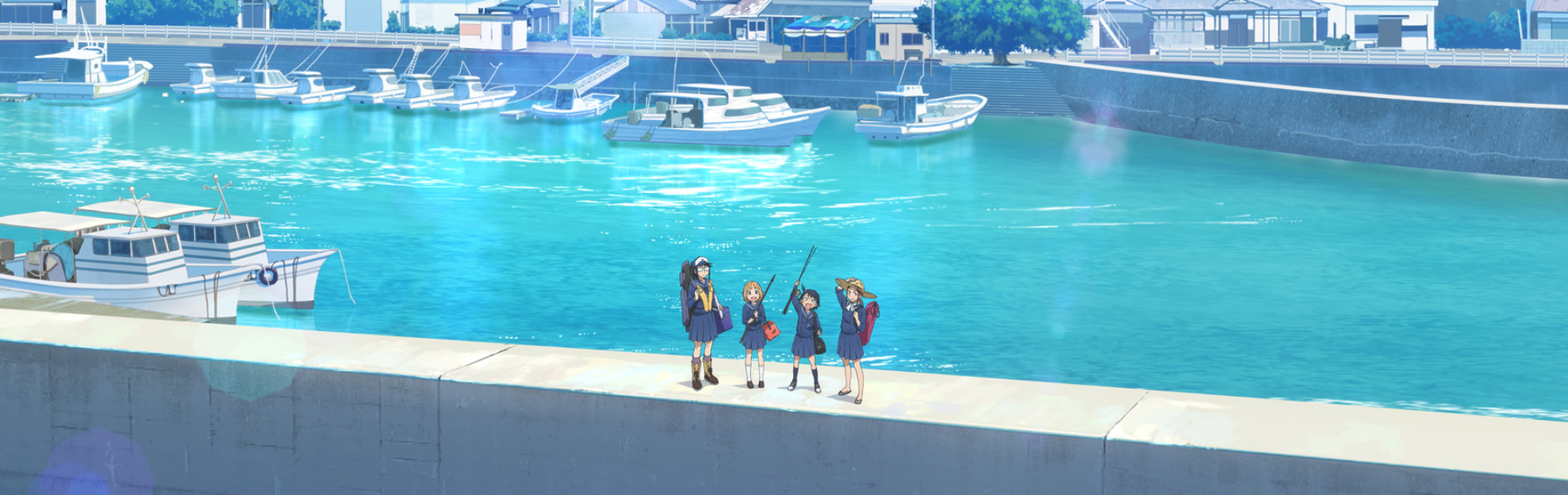
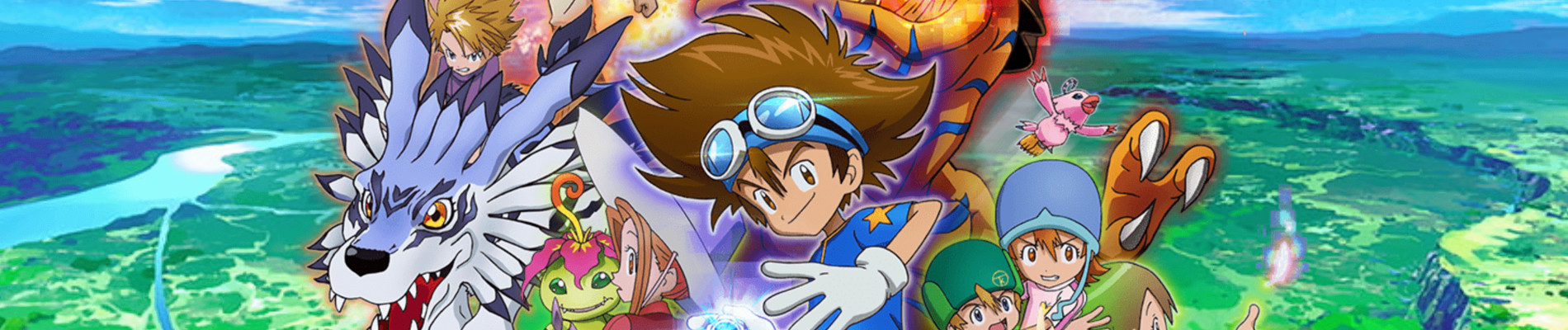
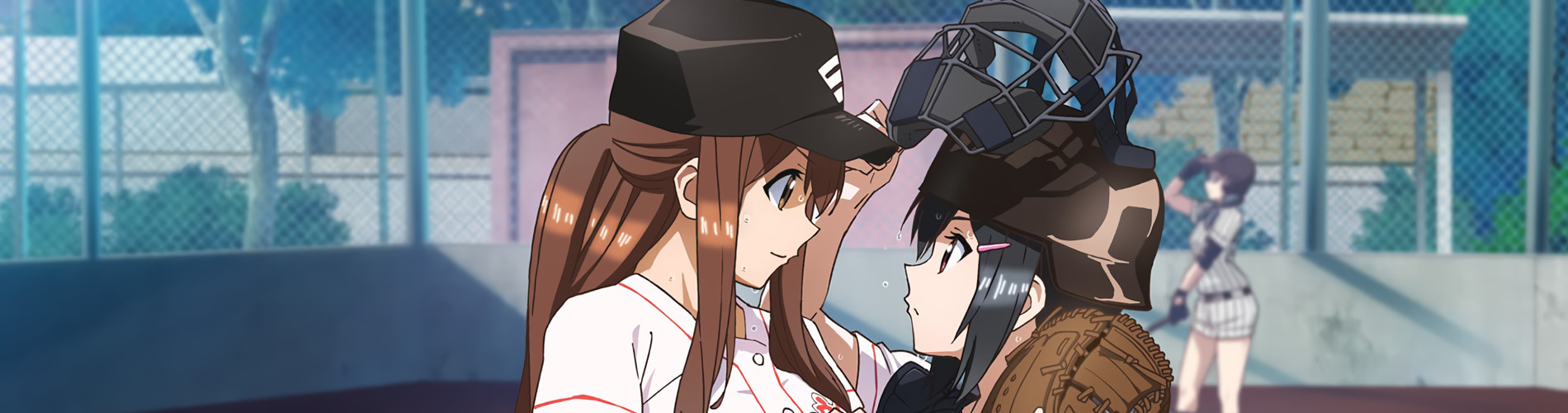
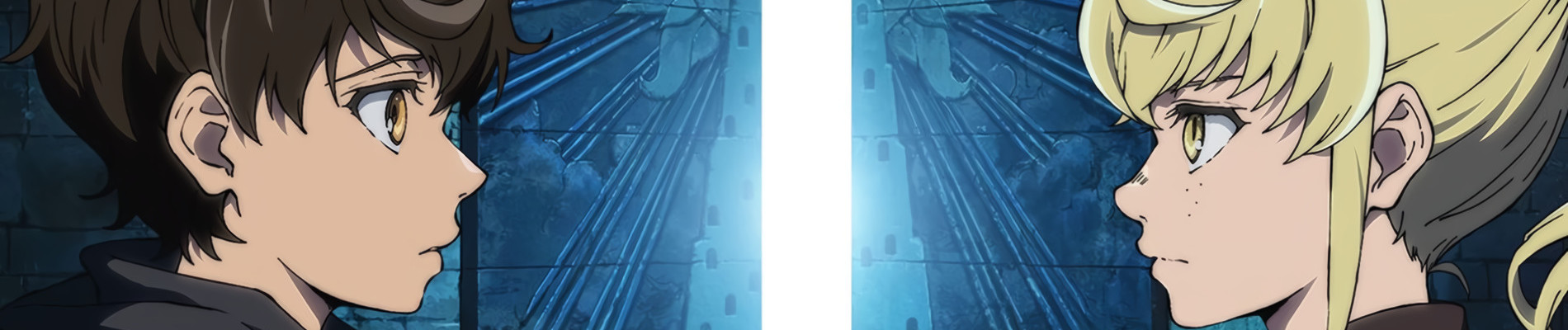

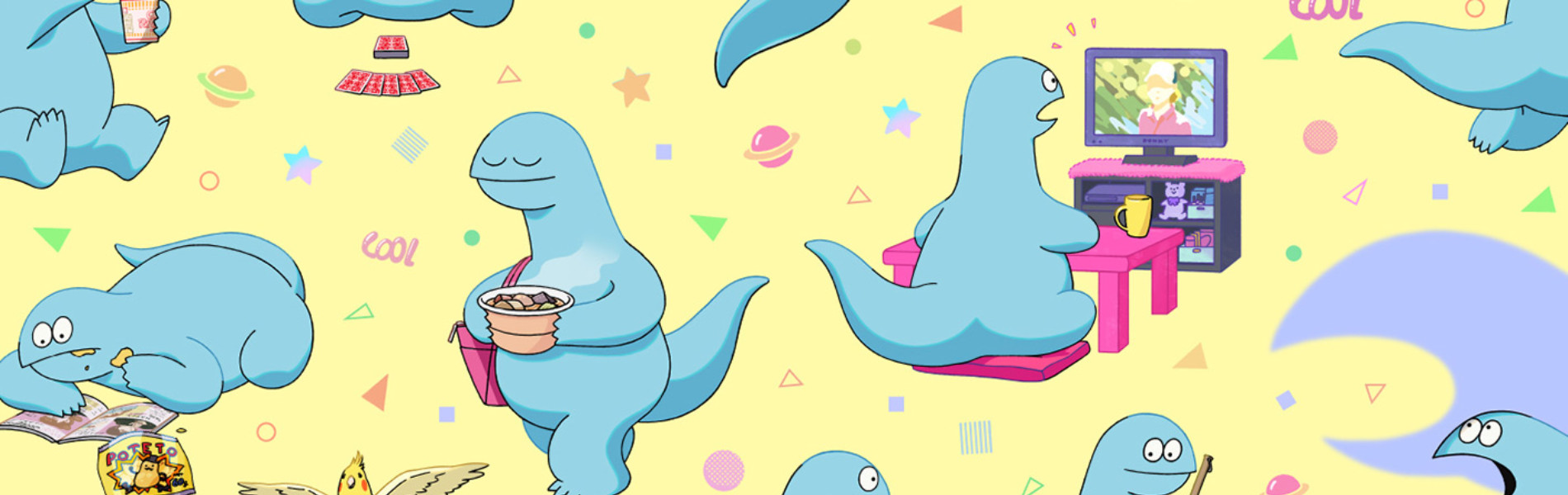


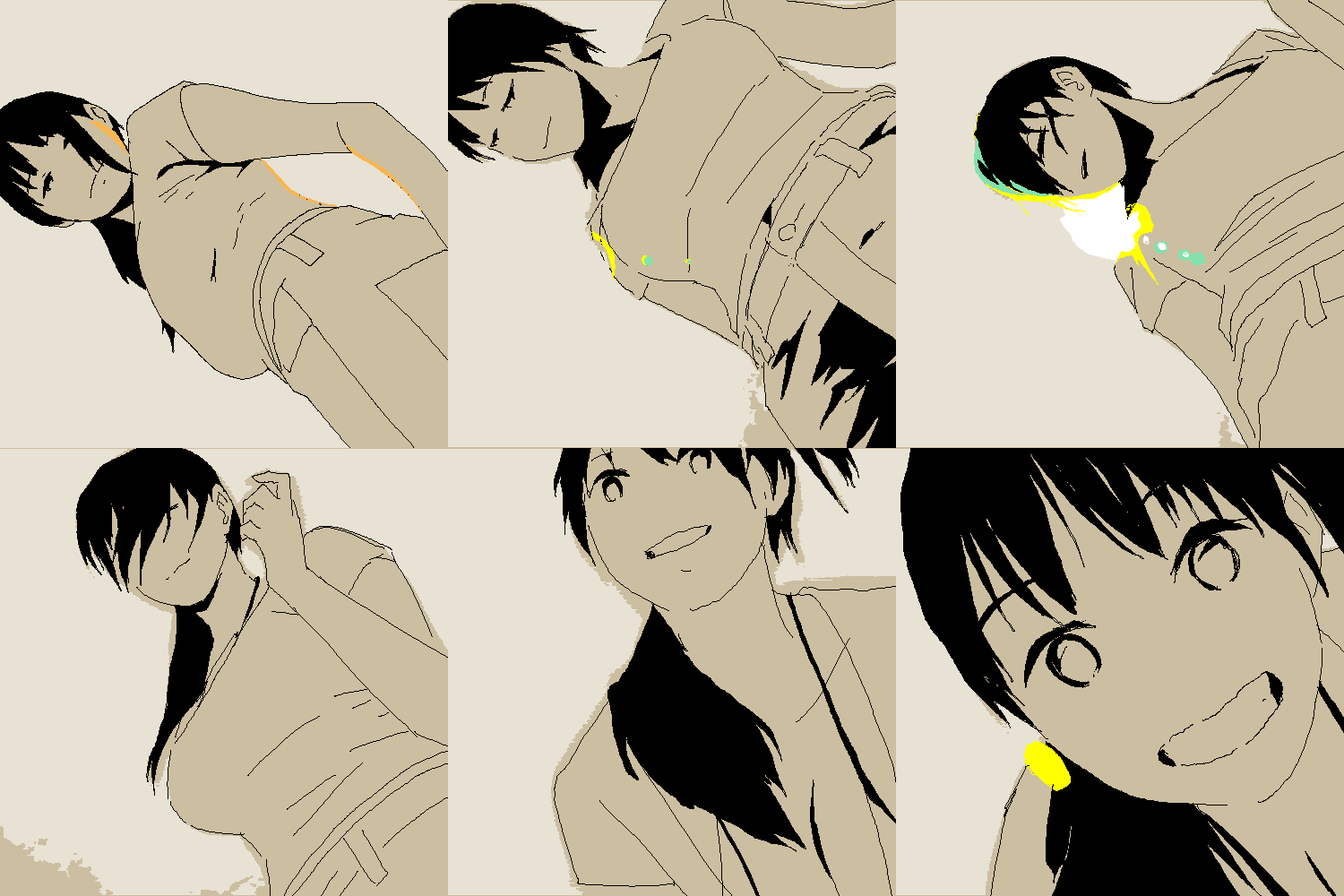


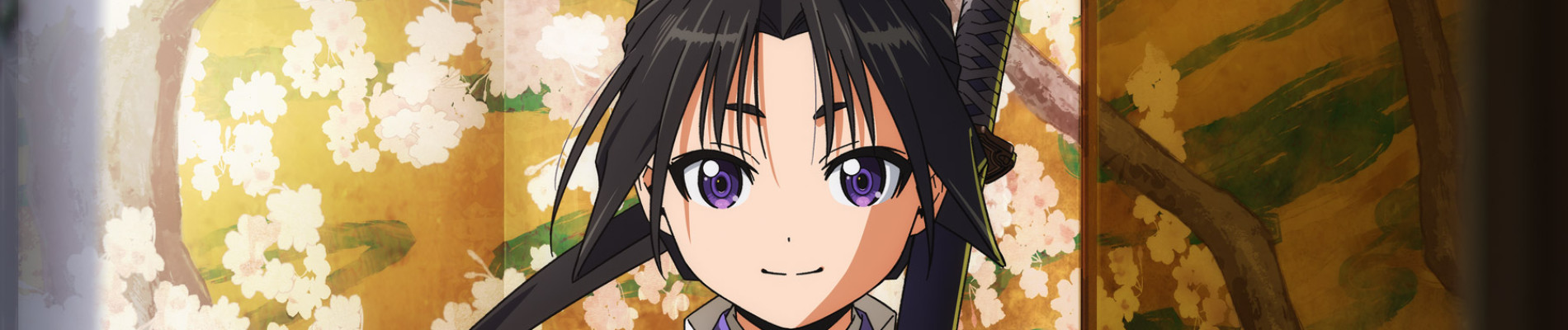
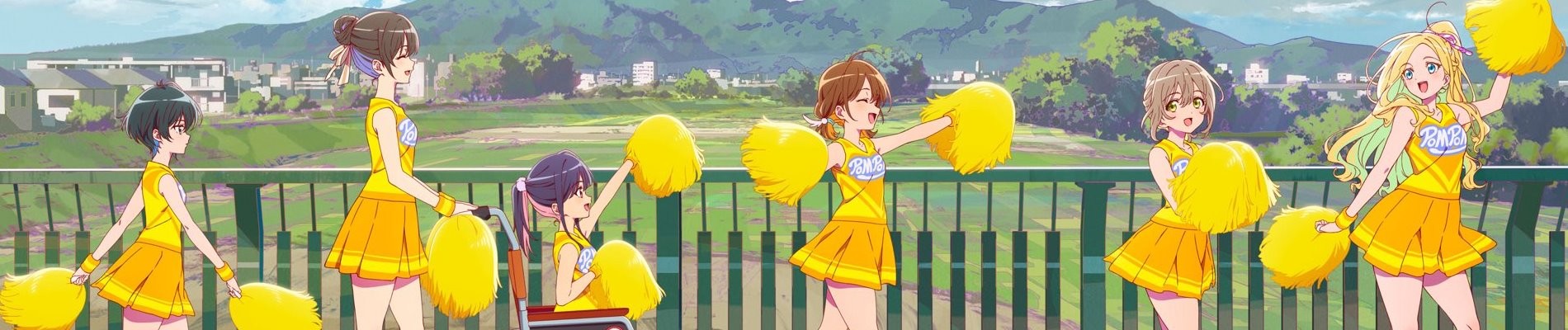




 MEGAWATCH


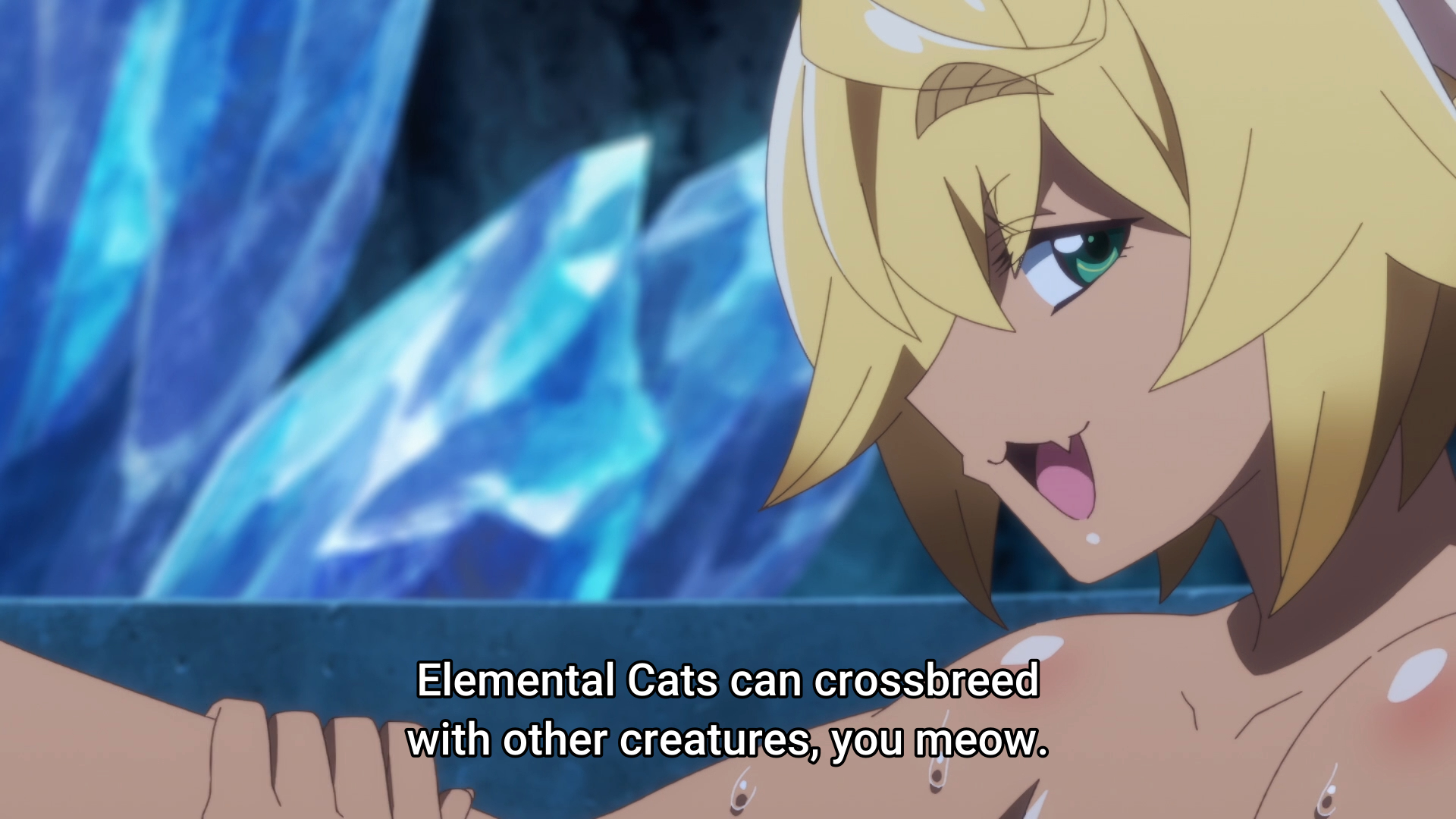


![“[anime] is precious to me because [it] makes me think I can have adventures, too.”](https://i.imgur.com/f4kLnNp.jpeg)


