“A chronicle of New York’s drag scene in the 1980s, focusing on balls, voguing and the ambitions and dreams of those who gave the era its warmth and vitality.” – IMDB
“When you’re gay, you monitor everything you do. How you dress, how you talk, how you act. ‘Do they see me? What do they think of me?’”
I had been thinking about how mainstream audiences want minorities to define themselves through suffering, and that canonized queer art often abides by cis-heteronormative frameworks because our own cinematic vocabulary is alienating to them. But queer people are not defined by pain. On the contrary, speaking as a transgender girl, my gender identity stems from euphoria and my suffering is the result of claustrophobic expectations of what cis people think I should be.
Jennie Livingston separates Paris Is Burning from non-queer presence almost entirely and thus largely severs from a definition of pain. The documentary lets queer people speak and live without vying for acceptance from a world that has long discarded them; they create their own domain to safely challenge gender, sexuality, and other cultural conventions through fashion and dance. Livingston captures through queer dialogue and humor why that space is so important: it’s the only place wherein we receive unconditional support for our expression.
As queer people do every day, Paris Is Burning has to engage with the ‘real’ world’s standards and queer people’s subsequent trauma in our participation. We’re forced into a world whose people and government reject us, revile us, kill us, and expect us to define ourselves by that when we have our own aspirations and dreams. Seeing these happy and hopeful faces talk about getting sexual reassignment surgery, becoming a model, or gaining wealth to support young runaways makes it so much more difficult to reconcile their premature deaths. Dorian Corey and Angie Xtravaganza died from the Reagan administration’s racist and homophobic treatment of the aids epidemic, while Venus Xtravaganza was strangled during sex work. We get punished no matter how hard we try to conform to non-queer societal expectations.
In spite of this permeating trauma and rage, Paris Is Burning celebrates a late-80s New York subculture where queer people could exist, dream, and express. Countless people light the canvas on fire with their outfits and vogues, bring trophies to their home, and embrace each other. In the final minutes there’s a brief scene of a girl who recently had sexual reassignment surgery, beaming with joy as the sun radiates behind her and her friend on the beach. Livingston does not create these compositions. Instead, she utilizes queer people’s environments, fashion, and faces for photographs of dreamers becoming the superstars. Paris Is Burning is and forever will be important because for 77 minutes it reminds us we’re not defined by our hardships, that we’ve always existed and will continue to do so, and that we’re the most beautiful people in the world.
The animation industry’s flaws are well-known; archaic formats pressure creators whose works are further diluted by production committees with financial incentives. They invest in safety while sacrificing quality with notoriously spartan scheduling. Animators are paid pennies and are overworked — sometimes fatally — on their labor-heavy jobs. The business runs largely on passion, but I wonder: how often creators are doing what they love?
Short animation breaks free from those commercial shackles. The unadulterated creativity compensates for its innate limited narrative range. In fact, time constraints are often strengths for idiosyncratic creators whose ideas are unfeasible in longer formats. An expanding market spurred by an increased level of access allowed many animators with unique voices to flourish. Standing out individually has become harder than ever, but that competition means there’s no shortage of amazing animation waiting to be uncovered on goldmines like YouTube and Vimeo. Animation is at its purest when there’s no reason for compromise and I hope It’s Bunsnax can help you find a way into these bite-sized adventures!
Yuki (Kana Hanazawa) gets caught up in a fight between two teenage boys who can control alien creatures.
Cencoroll 2009 studio Think Corporation (Japan) dir. Atsuya Uki Adapted from the award-winning one shot Amon Game by Uki 27 minutes
The most famous one-man anime project goes by the name of Cencoroll. With financial backing from the now-defunct Anime Innovation Tokyo, Atsuya Uki managed to adapt his award-winning one-shot Amon Game all by himself. Cencoroll is a bright example of independent animation’s strengths: all of its 27 minutes is one artist’s uncompromised vision, from its enigmatic worldbuilding to an iconic flat visual style.
Cencoroll‘s setting raises many questions, and it might frustrate viewers how little the 27-minute movie answers. The film’s sparse sound direction and plain character designs exude a sense of normalcy which sometimes feels detached from the alien spectacle. The main cast’s muted — yet detailed — performances keep it grounded as to immerse the viewer better into the worldbuilding. The homely atmosphere paired with Uki’s meticulous background art are captivating, and once the viewer is fully eased in is when Cencoroll starts violently morphing.
It’s remarkable how Atsuya Uki adapts and reaps the benefits of animation without sacrificing his strengths as an illustrator. Amon Game struggled to convey motion with its chaotic panels, but anime’s larger canvas keeps movement understandable in ambitious compositions. Despite Uki’s inexperience, he has a strong sense for pretty shots and makes sure to incorporate lots of objects in the background to always convey scale. While Cencoroll confidently lingers in its backdrops, it has no trouble exploding into animation. They are fierce bursts; like the alien creatures’ fluid morphing or flying debris after one of many violent impacts.
Cencoroll‘s tremendous success caused Atsuya Uki’s popularity to soar, to the detriment of the sequel’s production. Animating an entire painstakingly detailed short-length film was already a herculean task, but now he had to juggle other responsibilities along with it. It wasn’t until after Cencoroll‘s ten-year anniversary that its sequel was released in a joint screening aptly titled Cencoroll Connect.
It’s easy to see why part two took that long to materialize. Uki still doesn’t cut corners or sacrifice frames to what isn’t directly his vision. In fact, he ambitiously doubles down in Cencoroll 2‘s 48-minute runtime. The sequel takes a longer time fleshing out its narrative and increases the mystery by introducing new characters, each with their own controllable alien. Cencoroll Connect‘s epilogue announced a much-needed part three whose ten-second preview already raises new questions. Hopefully, it doesn’t take another ten years before I can cover that installment; I can’t wait to reside in the beauty of Atsuya Uki’s flat world once again.
Hinata (Anju Inami) falls in love with his classmate Shigure (Saori Hayami). On the day she moves to another town, Hinata chases after her to tell his true feelings.
Hinata no Aoshigure (Rain in the Sunshine) 2013 studio Colorido (Japan) dir. Hiroyasu Ishida (Penguin Highway, Poretto no Isu) 18 minutes
It took only a decade for studio Colorido to evolve into a powerhouse. Producer Hideo Uda founded the studio without a particular artistic vision, instead focusing on its business ventures. Uda figured that if he shielded his employees from bad industry practices, eventually their creativity would develop Colorido’s identity. And they did! Newcomer Hiroyasu “tete” Ishida, who gained popularity in 2009 with Fumiko’s Confession, quickly became the leading director because of his imaginative vision and all-round skillset. His talents were bolstered by Yojiro Arai, who blossomed into an incredible background artist during his tenure at Ghibli. That tag team was responsible for Colorido’s co-debut: Hinata no Aoshigure, localized as Rain in the Sunshine, whose style indicates what the studio came to be.
Colorido differentiate themselves by digitizing nearly every step of their production. Their time-efficient processes free up resources poured into character movement, which is necessary for Hinata no Aoshigure‘s motion heavy storyboards. Ishida benefits greatly from digital developments: he thrives in 3D spaces with his crazy dynamic camerawork and he uses loads of CG objects to create rich compositions when needed.
Hinata no Aoshigure is cheerful with Haruko Nobori’s coloring and silly character acting through which it develops its cast. Hinata is in perpetual motion through his facial expressions, hair flowing in the wind, or by stumbling literally head over heels for Shigure. Ishida taps further into the movie’s joviality by connecting the visuals to Hinata’s feelings: he finds peace through drawing, his comfort zones turn gloomy with him, and in his mind he’s flying after a train on a big swan when really he’s chasing a car on foot. Soaring through the skies and backed to a power-pop soundtrack, Hinata conjures an entire world filled with organic elements that contrast his reality: birds versus vehicles and vegetation on asphalt. While Ishida’s photography suggests Hinata’s imagination is greater than the movie can present, it’s still memorable because its landmarks like the helipad building or train ramp are used for great setpieces. Even the lamppost Hinata walks into is integral in creating that immersive space.
Technical jargon aside, ‘feeling’ is ultimately the most important factor in anime and Hinata no Aoshigure has got that in spades. It feels like an adaptation of a happy picture book, yet is crafted perfectly for its medium. The visuals and story are reminiscent of Ghibli, but charming enough to not feel derivative. It’s a self-celebratory 18 minutes wherein an artist overcomes obstacles by drawing strength from the world he conjures. Hinata no Aoshigure simply radiates a passion true to the studio’s founding philosophy: Colorido has become a place where creators make what they love.
SpongeBob and his nakamas battle a blubbered foe as the fate of the secret formula hangs in the balance.
SpongeBob Anime Ep1: Bubble Bass Arc 2020 Newgrounds (United States) dir. Narmak 15 minutes Watch on YouTube or Newgrounds
A clever parody was born amidst the heightening popularity of SpongeBob memes and anime. In 2017 independent animator Narmak caught lightning in a bottle by crossing Bikini Bottom’s iconic denizens through an overly serious shounen lens. Despite SpongeBob OP1‘s brevity and rough edges it became a hit all over social media, now sitting at 18 million views on YouTube.
Narmak returned three years later with a full fledged and massively improved 15-minute episode. Bubble Bass Arcis a testament to his artistic growth, especially comparing it to his previous outings. His older openings are novel proof-of-concepts that struggle honing in on their fragmented ideas, contrary to the concise OP3 included in this episode. Narmak paces himself better with his increasingly dynamic editing. These tighter storyboards replaced slowly panning head shots with fighting cuts and other movement while blazing through the character cast and their respective juxtapositions. It’s a near professionally refined opening that succeeds in feeling like part of a larger series.
Bubble Bass Arc is a labor of love. It’s entirely solo-animated and not without shortcomings, but Narmak is evidently a studious director. He grasps the essence of iconic layouts and creatively strings them together into confident storyboards. By recycling commonplace shounen settings the viewer doesn’t need to familiarize themselves, which gives the script greater leeway to reimagine SpongeBob’s characters and gags. The first half is especially rife with hilarious recontextualizations: Squidwards‘ pessimism here is an inferiority complex to foil SpongeBob’s protagonism, whereas Mr. Krabs is a secretive mentor past his best days opposing typical shounen main character naivete. Sandy and Patrick get little screen time but still fulfill side cast archetypes without straying far from the original series’ intentions. Bubble Bass Arc continuously takes those clever angles to successfully parody SpongeBob, and steadily distills nearly every shounen trope along the way. Perhaps it exhausts too much inspiration here to make an additional episode worthwhile, but Bubble Bass Arc stands on its own legs as an exemplary way to conduct a parody.
Bunnies violently slaughtering bunnies.
The Bunnykill series 2005-2011 Newgrounds (United States) dir. Juuso “Mottis” Andelin 68 minutes in total Watch on Newgrounds
For my first Its Bunsnax article, I have to pay respects to a childhood classic. Bunnykillis a series of Flash animations about bunnies slicing and exploding through waves of generic enemies, a concept Mottis admits he owes to fellow Newgrounds hit Madness. Bunnykill differentiates itself from its inspiration with cutesy bunny designs and vibrant coloring, which always makes it easier and more enjoyable to parse the dense action scenes. Its style remained consistent through the years, but there is very noticeable creative growth over each installment. While the original was just a homage, by part four Bunnykill had grown into its own as more varied setpieces came into play, and the action choreography became increasingly elaborate. Each entry is more dynamic than the last, with so much happening across the screen that it necessitates rewatching. That is no punishment: Bunnykill managed to stay amusingly ‘badass’ through its run despite being so edgy you could cut yourself on it. Unfortunately, Mottis hasn’t uploaded since the 2011 finale and formally announced his animation retirement this year, admitting Bunnykill has become incompatible with his personal life. It’s a shame we won’t witness another leap in quality for this constantly evolving series, but Mottis can look back proudly on the 7 million views he amassed.
Short film by avant-garde artist Keita Kurosaka.
Mochibei 2005 independent (Japan) dir. Keita Kurosaka (Agitated Screams of Maggots, My Face) 1 minute Watch on YouTube
Mochibei (“Fatass“) has always dangled at the deep depths of anime rating sites. Its reputation as a ‘shock film’ is unsurprising, given how abrasive and viscerally disgusting it is. However, Mochibei’s unpleasant nature is not some sick joke, but instead an insight into the suffering of someone with body dysmorphia. Our point of view is like that of a mirror as we face a disfigured and disturbed entity yelling curses while banging their head against the camera. No matter how much they change or cry, Mochibei finds their face so unbearably ugly it drives them to suicide. It’s a deeply unsettling one minute movie which you’ll probably hate, but that’s exactly what Mochibei wants you to feel.
At the top of the Tower awaits everything you have ever wanted, whether it is honor, pride, power, or influence. Rachel simply longed to see the stars.
Tower of God emphasizes luck, mainly of being born into a prestigious family, as essential to thrive. On his first exam, main character Bam immediately receives the graces and sword of Princess Yuri; one of ten women from such a family imbued and equipped with the king’s powers and weaponry. Descendants of those who have seized positions of power are ensured to remain there, as long as they do not step out of line.
A rift appears among our main cast, comprised of both those hailing from distinguished lineage as well as simple people. Master tactician Khun was ostracized from his influential family for picking kindness over tradition; strong Anaak is a runaway girl from a late Princess assassinated for bearing a child, and Bam and Rachel are branded ‘Irregulars’. Irregulars are forces that entered the Tower on their own, as opposed to ‘regulars’ chosen by the system’s caretakers. The elites’ agenda stigmatizes irregulars by painting them as threatening and encourages regulars to not associate with or aid them for their own good. The opposite occurs; despite their differences the classmates bond over their similarities uncovered during the examination period, causing a potential threat to the establishment.
Cue this season’s entrance exam arc; an effective culling procedure weeding out both weaklings and potential political threats. The Tower relentlessly promotes individuality by pitting up fighters against each other and planting seeds of jealousy within groups. The exam administrators—doubling as puppeteers— quash any attempt at unification by targeting weaker classmates and causing irreparable tension between individuals, making sure the machine’s cogs never stop turning.
One such pawn is Hoh, an Oni whose people were brutally slaughtered. The examinators leave discreet notes informing if Rachel is assassinated, Bam will quit the Tower, which allows Hoh to pass. The PTSD-stricken demon accepts the task as Bam’s innate strength enrages and corrupts him with hatred for confronting him with weakness and the inability to save his race.
Although the hide-and-seek test is shown to be a joint effort by the preceding episode, the team’s infighting instantly derails any hopes of using tactics: when Hatz creates a window of opportunity he gets abandoned by his treacherous teammates, much to the seeker’s annoyance. Hoh too carries out his plan and grievously injures Rachel before being immobilized. After his failure Hoh breaks down and commits suicide knowing he has thrown away all opportunity to climb the Tower. Despite the shocking betrayal, the entire class comes together saying a farewell, unaware of the puppet player above them. Perhaps turning a knife on an ally was inexcusable, but the group understands the corrupting pressure the Tower burdens everyone with.
The final examination arc enacted by main test administrator Hansung Yu appears as an opportunity to carry the faux-crippled Rachel up the Tower. However, it is quickly uncovered that the entire set-piece was orchestrated to assassinate Anaak, spy on and disrupt Khun and separate the outrageously strong Bam before his talents blossom. The power of friendship triumphs as fellow Princesses save their wounded sister by defeating her hitman, while Hatz shadows Khun knowing he’d never abandon the team. Only Bam, the least individualistic and most severed of the class, suffers a painful betrayal.
In the Tower, where power is everything, those who are incapable of mastering control over Shinshu are no more than dirt under the soles of stars. One such girl is Rachel whose only wish is to belong among those stars; a brightly shining light everyone can’t help but marvel at. At the cost of abandoning Bam, a cave-dwelling boy Rachel had saved and nurtured, she seizes the Tower’s invitation and interprets it as confirmation of her potential. However, she is mistaken, and her appearance immediately berated by the headmaster. He informs her that the Tower sought after Bam, who is then shown to courageously complete the entrance exam Rachel was too afraid to take. He, who came from even lower than Rachel, was gifted enough to land among the stars and became all she ever desired.
Bam and Rachel’s intriguing power dynamics shifts when the headmaster proposes an opportunity to fulfill her desires: if Bam is eliminated, she’ll be allowed to climb the Tower— an irrefusable offer as there is no way of leaving the Tower. Although the boy looks up to Rachel as a savior, she lurks from the shadows in disguise as to not grow more attached to her unsuspecting target. From afar she observes Bam developing friendships and combat skills, ironically despairing her further. The one person to consider Rachel higher than dirt is growing independent and becomes a star. Despite her pseudonym of Michelle Light, Rachel’s predisposition prevents any chance for her to become a community’s beacon herself— exactly what her masters intend on doing. After all, once the task is completed, it is easy to discard a puppet knowing nobody would miss it.
Rachel is resigned to a cruel fate within the inescapable Tower; rejecting her sole opportunity at freedom would force her into Bam’s silhouette forever— riding his coattails up the ladder but burning of jealousy inside. The system deludes Rachel into believing she could be a pawn promoting to a queen. It is all mere deceit as chief conspirator Hansung Yu knows better: destroy potential community leaders by preying on their weak external links.
Rachel’s archetype is antithetical to orthodox shounen that invariably promote hard work and friendship. Rachel is born ungifted, but that doesn’t make her any less of a human being. She’s a tragic insight that even the most kindhearted within capitalist societies are promptly discarded if they don’t boast a prestigious heritage. It’s not Rachel’s own failing but the Tower’s whims and superiors are what despaired and eventually corrupted her. It’s why Endorsi warns Bam to adjust his expectations; Rachel has suffered a separate lifetime of oppression without him now.
In the wake of Boon Jong-Ho’s lauded Parasite, Tower of God’s structure is all the more bitter. Although it is otherwise an exciting critique of capitalist power dynamics from a South Korean youth, the series commits an uncharacteristic misstep by squandering the sympathetic Rachel. Tower of God invites thematic ambiguity by framing the betrayal maliciously, which made her subject to the wrath of misogynist e-reactionaries misunderstanding her arc. Rachel is not a perpetrator, but an obvious victim of an exploitative and inescapable system eerily resembling reality, and deserved a more honest presentation and reception than she got.
Episode 9 is a fine exhibition of Tower of God‘s dazzling heights and subsequent pitfalls. The series finally breaks the communal spirit it had built by emphasizing the Tower’s individuality and how that turns people into traitors and conspirators. #9’s Team Endorsi is an effective parallel from last episodes Team Khun. The latter’s cunning leader effectively won the challenge by virtue of smooth teamwork, whereas the former is plagued by infighting before they even start: Khun’s scouts utilized themselves as sacrificial pawns, Hatz’ teammates leave him out to dry. The first heavy dramatic blows are dealt when Hoh’s treachery leads to his suicide and a gravely injured Rachel. The one-two punch elicits an interesting response: where I rooted for Khun’s hidden agenda I found myself angry at Hoh’s. Tower of God’s extensive build-up of conflicts pays off here by reiterating its theme of dependency. That had always been present in the Bam-Rachel dynamic — to the point Bam would leave the tower if Rachel were to die — but Khun’s efforts are rewarded because he acts to not lose any friends made, as Hoh succumbs to paranoia and self-loathing by acting out of self-interest. It’s an affirming philosophy and a rebellion against the Tower; perhaps Hatz would’ve landed an unlikely strike on Quant had his teammates confided in him, and how powerful could a proposed Princess of Jahad tag team be?
“But still… it’s how I feel. I can’t help it. Even if she hates or despises me… I’ll protect Rachel.“
#9 conflicts in its execution as well. Although it piles on the paranoid conspiracies with subtle cuts to Hwaryun and a mysteriously disappearing silent monster, it suffers from overexposition at inappropriate timing. While Bam’s limitless potential is cleverly asserted by how quickly he masters a Ranker’s Shinsu technique, actual fights remain sterile and lifeless. Although Serena’s speech at the end is a genuinely emotive and subversive moment, it is immediately undermined in an odd tonal shift when Quant grabs Endorsi’s panties. Tower of God’s potential is obvious, yet its elements do not strike its desired balance yet. Hopefully, that fixes itself later on in the adaptation, but it’ll have to rely on the cute Anaak shots and Kevin Penkin’s ever-brilliant soundtrack.
Intro Bonito presents itself opposite to what it truly is: Sarah Bonito’s songwriting is exceptionally poignant, carrying an anxious undercurrent in spite of her simplistic vocabulary, backed by Gus and Jamie’s deceptively saccharine pico-pop production fueled by retro game samples and KK sliders. Kero Kero Bonito’s soundscapes are that of naivety serving as rejection from growing up in a scary world. The Japanese would call Sarah’s societal dissociation ‘denpa‘, compounded by the music’s fantastical strangeness to outsiders. Much of the current internet generation have, ironically, grown disconnected from what society declares reality, and exactly in that anxiety does Kero Kero Bonito thrive. ‘I’d Rather Sleep‘ summarizes Intro Bonito best; falling in a depression because you’re incapable of keeping up with the world around you, struggling to retain the imaginative, innocent happiness of being a child (“Trees used to talk to me / Now I know what’s real and what’s fake“). The weight of adulthood suffocates Sarah, struggling to cope with the societal expectation that she should become a mother just because she is a woman on ‘Babies (Are so Strange)‘; the homogenization of students through rigid school systems that discourages creativity (‘Homework‘); deforestation and nature’s increasing artificiality caused by industrialization in the most bittersweet third verse ever on ‘Let’s Go To the Forest‘ (“Oh wait, the forest got demolished / When they built the airport years ago / But we can still go see the ocean / Cause they put it in a bowl at the mall“).
Although monotone, Sarah’s sympathy lends itself through her recital of many relatable anecdotes examining how anxiety manifests itself at a young age: her dissociation had always been present as she would rather watch ‘cool’ kids reach the top instead of climbing the frame herself (‘Park Song‘), and was alienated from her claustrophobic and tiny home place just because she looked different, causing a strong desire to fly away (‘Small Town‘).
However, Intro Bonito isn’t merely skepticism and bittersweet disappointment hidden behind cutesy drawings against pink backgrounds: it introduces itself with bombastic fanfare on the Kyary Pamyu Pamyu-reminiscent title track, takes agency into its own hands defying social expectations on the gimmicky ‘Sick Beat‘, and despite its tingly sad ending, ‘Pocket Crocodile‘ optimistically cherishes the memories of love and happiness from something as ‘odd’ as a crocodile, rather than to sob about them.
Intro Bonito encourages catharsis by celebrating unity amongst diversity, notably with its high point of ‘My Party‘, sharing the common theme with the absent ‘Flamingo‘ that everybody is invited to the Kero Kero Bonito party. No matter your appearance or background, you too can join in on the fun! Although sonically alienating they are so appealing for they hold out their hand to carry you out of a rut. They acknowledge it is difficult but refuses to reject society, rather celebrating individualism and creativity in spite of rigid expectations. Very little fills my heart with more joy than Sarah and the boys finally spreading their wings to fly away from Kenilworth like they wished, so they could instill happiness in the hearts of those who need it around the world.
imdb | letterboxd | rateyourmusic Directed by the Coen brothers Starring Tommy Lee Jones, Javier Bardem, Josh Brolin
The Coen brothers’ 2007 neo-Western masterpiece No Country for Old Men has been rightfully catapulted into classic status since its release for its unique structuring and incredible screenwriting. The Coen brothers constantly elude expectations for a film about a drug deal gone awry. Whereas typical action films would introduce the movie with the flashy drug deal, No Country for Old Men follows how innocent Llewelyn Moss gets reeled into this predicament. Its atypical structuring and unpredictable plot beats, particularly in the final act where the heroic main character gets killed off-screen, the antagonist presumably gets away with his deeds, and the film ending on a quiet, vague yet contemplative monologue, set the picture apart from its contemporaries.
This unconventional approach to genre tropes fits No Country for Old Men’s omnipresent futility. One can’t help but feel hopeless when fighting (or escaping) from the embodiment of fate that is Anton Chigurh. His quirk is the coin toss, allowing potential victims a chance to escape death if they call it right. It’s a clever metaphor for death being entirely random. Not just Llewelyn (Josh Brolin), who actively tempts it by stealing the money, but also the gas station owner and even the bird unknowingly meet eye-to-eye with this grim reaper, although the latter two get to live another day.
Even if you hadn’t seen this film, you could string together what happened based on this frame alone. Brilliant use of the wide lens, lighting, and environment to create a frightening shot.
Anton Chigurh, portrayed by a stunning Javier Bardem, is frightening because of his commitment to fate and his principles. Chigurh fully accepts the brutal injuries he suffers from a car accident and improvises how to make the best of his situation. The ending remains consistent with the rest we see of the scheming Chigurh, who never relinquishes control of any situation.
However, Bardem isn’t the sole outstanding performer here. Tommy Lee Jones is stellar with several dialogue scenes where he subtly conveys a wide range of emotion. Although an anxious cop on the brink of retirement could lead to overacting, Jones feels remarkably human. I have to honorably mention side-characters Woody Harrelson and Kelly Macdonald as well, each of them having defining scenes within a little amount of screentime.
The Coen brothers maximize the potential of each actor by crafting such coherent scenes. Although No Country for Old Men does contain lots of well-written dialogue, the respect the directors have for the viewers intelligence is commendable. For instance, the motel scene uses lots of auditory cues such as footsteps and the tracking device’s beeping. The haunting lack of music builds up the scene slowly, until it erupts into a tense gunfight. Such a scene is paralleled later, when Ed Tom investigates the house Llewelyn gets murdered in. There’s a similar tense, scoreless build-up as Ed Tom imagines Chigurh’s presence in the motel room, but it does not climax into explosions. Ed Tom, feeling outmatched by evil, retires after facing his deepest fears.
The perfect editing and cutting of scenes and shot composition fully convey critical information. The Coens’ canvas is often so richly painted it allows them to supersede dialogue entirely, which in turn grants the talented cast the opportunity to act at their peaks. No Country for Old Men was eye-opening for me; watching it makes me feel like I understand the beauty of cinema, even if the films aesthetic isn’t typically pleasing.
“He’s seen the same things I’ve seen and it certainly made an impression on me.”
As displayed above, parallels are a recurring way for No Country for Old Men to show its wit. Both Chigurh and Ed Tom take their place in Llewelyn’s seat, showing us their fates have converged. The former is sharp and methodical in his posture, causing a sense of unease, whereas the latter slumps, takes a sip of the milk, and just relaxes. By blurring the reflection it feels comforting. These postures tell us a lot about the personalities of these characters, but also their relationship to Llewelyn.
No Country for Old Men is in large part a film about the hunter becoming the hunted, and sets an interesting parallel with Chigurh murdering a man on the road, and Llewelyn failing to fatally injure a deer. It showcases Chigurh’s prowess and foreshadows Llewelyn’s inevitable misfortune as he fails to murder his prey, again. Llewelyn’s first actions are literally of him failing, which turns out to be a key character aspect. Good screenwriting characterizes swiftly, often through non-verbal actions, and the first ten minutes excel in doing so.
But what makes me adore the Coens is their masterful shot composition, exploiting every inch of the frame they have for a purposeful and aesthetically pleasing canvas. Their wide lenses are their greatest strength. This, paired with their slow cinematography, let the Coens forsake unnecessary camera movement. Every shot they paint includes some environment to either establish or re-contextualize their respective scenes. They bring their films alive that way.
In a complete juxtaposition with the rest of the claustrophobic, dark, desolate film: here the bright daylight warmly coats the screen, whereas the background mountains and buildings give us a size comparison. The shot is expansive and optimistic, and it culminates in an overwhelming sense of freedom and maybe even a bit of hope. Perhaps our hero, after his epic speech, will return home unscathed after triumphing over the villain!
But he doesn’t. After all, it’s No Country for Old Men, and the film introduces (and thus foreshadows) this character with his failure.
Aside from encapsulating practically the entire film within five minutes, the gas station scene highlights a key Coen brothers strength in making the most of their environment. By littering the setting with trinkets, the place feels real and ‘alive’. By placing the actor here, he too feels more real and alive, making us sympathize with him and giving purpose and tension to its respective scene.
But also, it’s simply admirable to wonder how much effort went into designing and defining the living spaces of each of these characters. It brings entire scenes and characters, otherwise just concepts, alive. No Country for Old Men is much more convincing for it.
My favorite bit of visual storytelling in No Country for Old Men comes at its very end, when Carla Jean meets her end.
Although omitted from the embedded video, the preceding shot is of Carla Jean being at her mother’s funeral, establishing that Carla Jean is the key actress of the scene, so the viewer has an understanding that it’s her when the next shot is of a car entering the driveway. Then we get another establishing shot of her mom’s living room, with Carla Jean herself entering the frame shortly after. The next cut of is of the morose Carla Jean who had been looking at the ground all the time shifting her view up, to see air breeze through the open window, with the implication that Chigurh entered the house. This is confirmed by the next cut where Carla Jean opens the door and sees a menacing Chigurh before she meets her end.
No Country for Old Men deservedly etched itself in film history with Oscar wins for best motion picture and directors as a palpable celebration of the medium. The Coen’s masterful visual storytelling and direction amplify each actor’s skills. Whether it is Tommy Lee Jones’ difficult expressions, Javier Bardem’s off-script choke on a cashew nut, or Woody Harrelson’s anxious flinch at a loud phone interrupting his futile bluff — each scene is essential and a triumphant display of cinema expertise.
“There are no more barriers to cross. All I have in common with the uncontrollable and the insane, the vicious and the evil, all the mayhem I have caused and my utter indifference toward it I have now surpassed. My pain is constant and sharp, and I do not hope for a better world for anyone. In fact, I want my pain to be inflicted on others. I want no one to escape. But even after admitting this, there is no catharsis; my punishment continues to elude me, and I gain no deeper knowledge of myself. No new knowledge can be extracted from my telling. This confession has meant nothing.”
My grandfather once said that “everything that happens in America will some day come here”, and it stuck with me as I saw the modest Netherlands shift further into media glorification and endless consumerism. Black Friday is coming up and Singles Day just happened; for me, wholly new concepts designed to further enrich billionaire-led corporations and for many others another opportunity to seek escapism in materialism.
In American Psychowe observe Patrick Bateman, an American twenty-something 80s yuppie who is desperate to fit in with his narcissistic colleagues who are constantly busy with making reservations at fancy restaurants and getting luxurious name-brand suits and subtly off-white colored business cards to impress each other. Bateman is often misidentified by his peers and then insulted for being a spineless dork, contrary to how we see the stunning Christian Bale, a well-groomed and exceptionally fit man with heaps of natural charm.
One such colleague is Paul Allen, another sleek businessman who manages to impress by reserving at the exclusive Dorsia, on a Friday night, all the while showing off his new business card, infuriating Bateman to no end. From here on out we indulge in Bateman’s wild delusions as he imagines murdering Allen, as well as homeless people, prostitutes, and eventually everyone as he attempts fleeing from the cops.
In one key piece of monologue Bateman explains he feels only two emotions: greed and disgust. Allen is murdered because of sheer envy, because he achieved the successes that Bateman desperately tried to replicate to no avail, and those with a lower social standing get murdered because he feels no connection and is even disgusted. A particularly funny bit is after Allen’s death when Bateman breaks into his apartment and is deeply envious with the view, which is marginally better.
Bateman too, however, is a figment of his own fantasy. He self-aggrandizes himself to look like a smooth talking, fit Hollywood actor but when push comes to shove he breaks down and stumbles awkwardly into saying he has to return some tapes, further emphasized when his peers unknowingly call Bateman a coward. Its commentary about the image of oneself is especially apt in the social media era where we tie much of our worth to addicting yet fake internet points.
Our desperate desire to trump over other’s possessions makes us hollow and fuels us negatively. Patrick Bateman is wealthy and extremely well-off but struggles with existence as he fails to bond meaningfully, or even empathize, with anybody. His reality is vapid and so is anything that he, and by extent his colleagues, pursue.
American Psycho is a highly unique postmodern work analyzing absurdity in a society so desensitized to stimulation by virtue of our excess, and an overwhelming insatiable desire for more. But there’s inevitable pointlessness to all of this; there is no catharsis. As long as we remain gluttonous we will want to inflict pain upon others while not gaining a greater knowledge of ourselves. Patrick Bateman is the same character that he is from the very first scene. Him confessing his murderous imagination has meant nothing for the world remain a hollow shell seeking out a next physical thrill.
The films title is apt and doubly layered. Bateman undoubtedly is one but what could be said about the rest of this careless society moving at lightning speed. As Bateman carries Paul Allen’s corpse out his apartment all that his friend can remark is interest in the lavish Jean-Paul Gaultier duffel bag.
It might seems ridiculous but we all have a little bit of Patrick Bateman within ourselves. We, as a society at large, are the American Psycho. We too are hollow beings seeking out validation by meaningless possessions. We too gamified our self-confidence with Instagram and Twitter likes. We too dehumanize ourselves as we consciously discard our beings to let our accessories craft our identity, hoping to feel some importance in this utterly pointless life, where we suffer from a perpetual disconnect with our individual ‘reality’.
At some point we could all say that we are Patrick Bateman; some kind of abstraction who have a physical form and as we shake hands and feel our flesh gripping each others and maybe for a second we think our lives are probably comparable…
anilist | myanimelist このはな綺譚 12 episodes | Fall 2017 | Studio Lerche | Manga by Sakuya Amano
In Konohana Kitan we follow kindhearted foxgirl Yuzu; a klutzy maid at the suspiciously celestial Kokohana-tei (a bath house/hotel) where she befriends a lovely cast of colleagues and costumers that teach Yuzu about the world and humans by interacting and her listening to their wonderful stories in episodic format. Although such isolated stories often lead to inconsistency; Konohana Kitan never drops the ball. At worst it is a mere ‘fluffy’ endeavor, but it always keeps developing its characters and relationships. Its relative lows are easily forgiven when its peaks are tightly written, emotional narratives about the supernatural that all lead into its spectacular finale. It should be noted that the show relies heavily on knowledge of Japanese folklore and deities, but it does not stand in the way of its intelligent twists or the heartwarming synergy among its cast.
Its art direction, led by Atsushi Yokoyama, is captivating with its pleasing, floral aesthetic and tendency to linger on pretty shots with vibrant lighting. Episodes located around markets or festivals are filled with background characters and little details happening everywhere which is a surge of liveliness, which is then juxtaposed with its equally atmospheric nightly settings that are much more serene, reflected in its sound direction as well. However, what solidifies the homely world Konohana Kitan crafts are its characters that, with their abundance of facial expressions and tail waggling, feel very much alive. It’s impressive to nail the ambiance as well as director Hideki Okamoto does; stringing together a rather difficult collection of episodic set pieces that constantly set one step into the metaphysical without being confusing.
Look at the wonderful lighting, pretty rainbow, and genuine smile! It’s so bright and uplifting!Pretty, pink cherry blossom backgrounds fill the entire show, amplifying its warmth, coziness, and vibrancy with its pleasing aesthetic.
Don’t let the bath house setting deceive you; even though there’s a mild amount of nudity, none of the shots have sexual intent — most of them actually further developing the organic yuri relationships that get further expanded upon in the manga.
Konohana Kitan is a brightly shining example of how to execute a cute girls doing cute things show, with its barrage of sweetness balanced out by its subdued dramatic moments. Relationships that develop naturally over time leading to a cast that bounces off each other both in a playful and serious manner. Konohana Kitan is a pure healing anime; one whose warmth could move even the coldest of viewers.
We have this one glorious season left before we fully start noticing the havoc COVID-19 has wreaked upon the already desperately tight anime industry. Thankfully, it temporarily goes out in a blaze of absolute glory with one of the more stacked seasons in recent memory. As much a blessing as a curse; such barrages of exciting projects forces me to choose and sideline many honorable mentions that would’ve made it in weaker seasons.
There’s the overabundance of popular sequels: Kaguya-sama: Love is War?, Fruits Basket, andAscendance of a Bookworm all receiving their sophomore entry. There’s also the fifthShokugeki no Souma season by J.C. Staff, whose dedication to fully adapt a manga that had soured years ago draws some of my misplaced admiration. Finish what you started, I guess. Finality we won’t get in the long-awaited Neon Genesis Evangelion‘s Rebuild series, looking to be delayed yet again.
As are practically all other theatrical releases — big bummer for Heaven’s Feel fans — but I’m disappointed having to wait longer for Nakitai Watashi wa Neko wo Kaburu; written by Mari Okada and directed by Junichi Satou (Sailor Moon). Although romantic melodramas aren’t up my alley, I was excited for studio Colorido’s ambitious visual style they’ve rapidly defined themselves with. There is also Omoi, Omoware, Furi, Furare, adapting Io Sakisaka (Ao Haru Ride)’s dramatic shoujo romance. Not my thing per se, but would’ve loved to see A-1 Picture’s strengths on the big canvas.
And my god, there’s so much more. Yesterday wo Uttate, a 90s seinen manga adaptation and a director’s passion project tackling heavier themes like self-loathing and post-graduation blues. Mewkledreamy, a sugary mahou shoujo about selling cutesy plushies, finally picked up by a subgroup. LISTENERS sees Dai Satou and Hiroaki Ando collaborating for an apparent hate-it-or-love it affair, tapping into early-00s aesthetics and drawing comparisons to Eureka Seven and FLCL. Hiroaki Samura receives his second adaptation in a short while with Nami yo Kiitekure; whose explosive pilot has impressed many friends. There’s Shadowverse adapting the titular mobile collectible card game. Arte, a joyous series about becoming an artist in 16th century Florence. And Gleipnir…
But now for the real meat of the article, the series that I did pick, ranked and written up appropriately:
Studio CygamesPictures dir. Takaomi Kanasaki (KonoSuba, Kore wa Zombie desu ka, Tokyo Ravens) Adapting a popular mobage legally unavailable in the west. Crunchyroll
Princess Connect! Re:Dive follows the mysteriously powerful Yuuki (Atsushi Abe), who suffered extreme amnesia after being transported into a fantasy world, and Kokkoro (Miku Itou), an elf girl meant to guide and support him in their quest to defeat evil. I think.
For fans of: KonoSuba
Princess Connect! Re:Dive will fit right up KonoSuba fans’ alley: both deride its humor and share similar comedic timing from its casts idiocy; but where the latter is mean-spirited, Princess Connect!is blissful in its stupidity. It immediately asserts levity with a premier focus on wholesome character relations, basking in a warm color palette and summery setting. However, Princess Connect! frequently indulges into its boring by-the-numbers fantasy setting, requiring the viewer to have a large tolerance for generic isekai, even if its action is visually impressive.
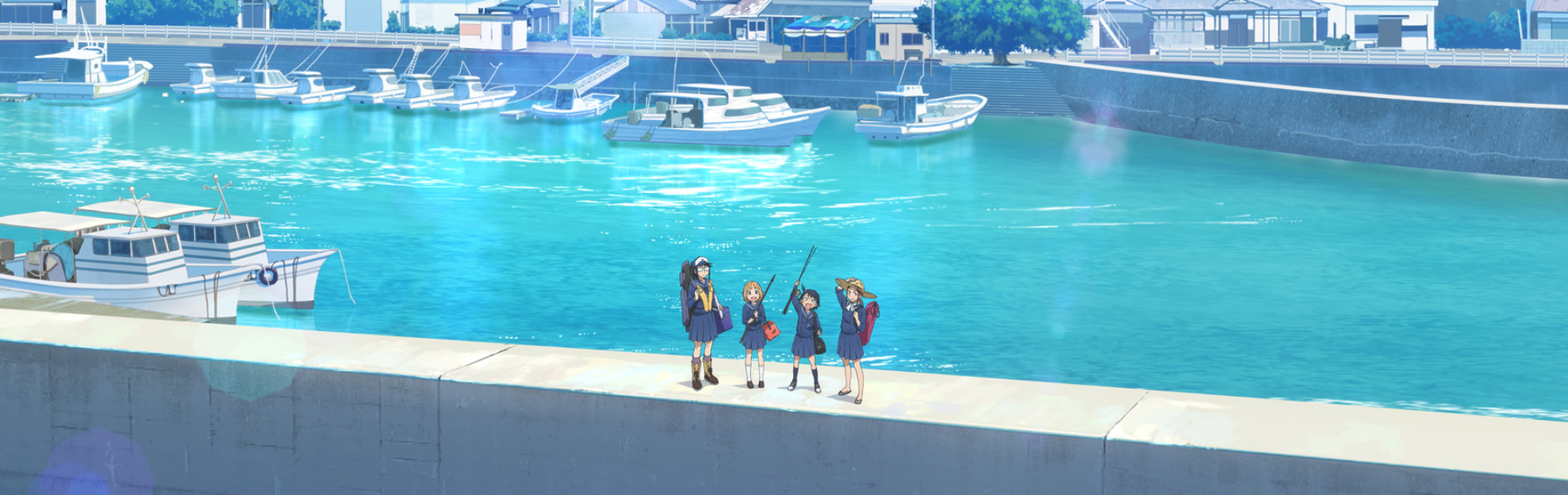
Diary of Our Days at the Breakwater Studio Doga Kobo dir. Takaharu Ookuma (debut) Original manga by Yasuyuki Kosaka Funimation
“If you catch it, you eat it!” is the breakwater’s club motto. City girl Hina (Kanon Takao)’s peaceful high school plans get upended when Kuroiwa (Yuu Sasahara) coerces her into joining that club. Although reluctant at first, she gradually begins appreciating and sharing the ocean’s beauty with her fellow members.
For fans of: Doga Kobo
Houkago Teibou Nisshi is exactly what you would expect a Doga Kobo cute-girls-doing-fishing adaptation would be: wholesome with lesbian undertones. Unfortunately, it looks like a lesser entry lacking the aesthetic polish and expressive character acting that set apart the studio’s key works. However, most frustrating is its sudden otaku humor: in one scene an octopus assaults the main character for laughs and later she comments on another’s breasts. Those are typically minor offenses but Houkago Teibou Nisshi squanders its uplifting aura knowing perverted jokes can pop up any moment. Despite its blemishes, it remains a recommendation to those enjoying the tried and trusted Doga Kobo formula.
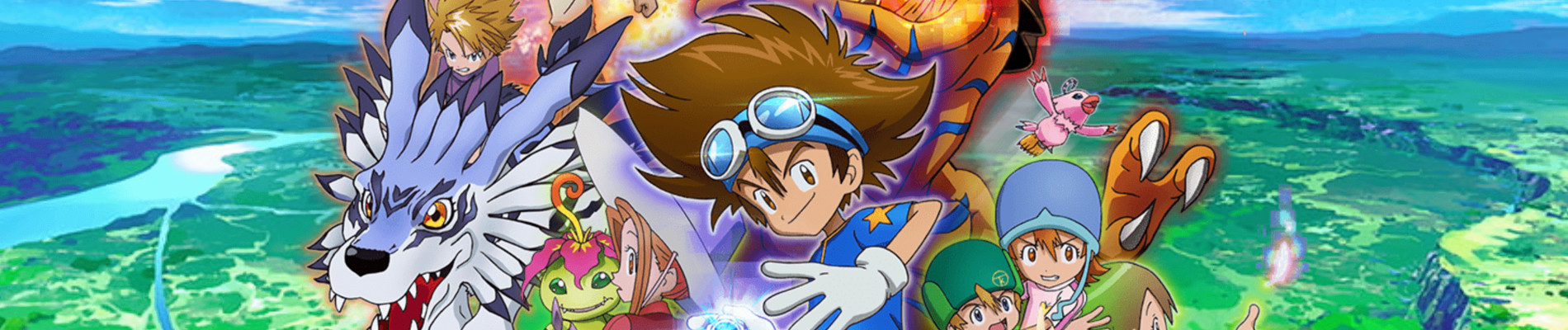
Studio Toei Animation dir. Masato Mitsuka (Dragon Ball Super: Broly, Mahoutsukai Precure!) A remake of the 1999 anime sharing the same name Crunchyroll
A strange destiny befalls the young Taichi (Yuuko Sanpei), who is transported into a digital world home to many Digimon to fight the increasing amount of cyberterrorism plaguing Tokyo.
For fans of: the original Digimon Adventure, Pokemon
Whereas the direct competitor and concurrently airing Pokémon has excelled in a comfortable and immersive low-fantasy setting, Digimon Adventure:‘s world and designs are awkwardly convoluted. That weakness could just as easily morph into its key strength with abstraction allowing for more ambitious worldbuilding and its ambient alienation for greater narrative gravitas. Digimon‘s premier weakness yet is its dulled color palette, exuding a lifeless and cheap look. Toei’s ace animator Ryo Onishi alleviates that with his explosive and weightier action cuts injecting dynamism where it’s desperately needed, but one man can’t key animate every sequence in a long-running series…
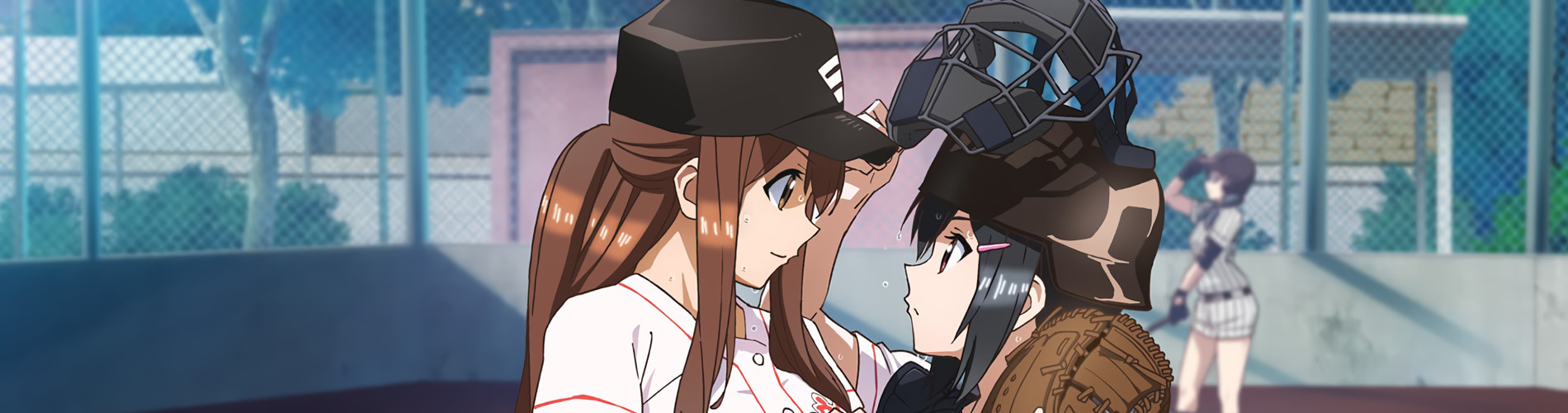
Studio A-CAT dir. Toshinori Fukushima (Major series) Original manga by Mountain Pukuichi Funimation
Yomi (Kaori Maeda) is a pitcher burdened by her own talents and on the verge of quitting baseball for good until she meets her childhood friend Tamaki (Satomi Amano) at their new high school. Tamaki’s own skill reinvigorates Yomi’s passion, and together they attempt rebuilding their team from former glory.
For fans of: Hachigatsu no Cinderella Nine, Harukana Receive
Tamayomi is almost adorably generic, with its openers hitting every plot beat you would expect a high school sports club anime to. When not animatingthighs it is visually unimpressive with inconsistently stocky character models, awkward CGI, and conservative storyboarding. In spite of its glaring writing flaws and middling production, Tamayomi carries genuine heart that lends for authenticity and offers legitimate potential if it develops its relationships and matches properly.
Studio Telecom Animation Film dir. Takashi Sano (debut) Original WEBTOON by SIU Crunchyroll
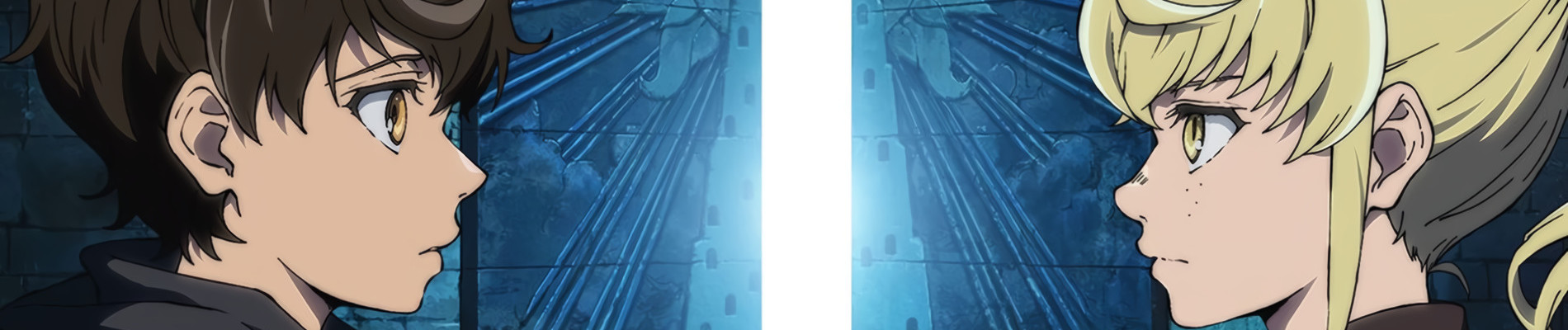
The Tower of God fulfills any wish to those who complete its dangerous challenges. We follow the young Bam (Taichi Ichikawa) venturing through the tower to find his close friend Rachel (Saori Hayami), who has entered it herself to see the stars.
For fans of: Hunter x Hunter; Made in Abyss
Likely the boldest and most exciting newcomer this year is Tower of God whose extensive and mysterious worldbuilding makes for immense potential. Most curious is its departure from typical battle shounen tropes. Where friendship would be power, forced alliances are now arbitrary and susceptible to infighting. Where contemporaries would encourage hard work to achieve greatness, Tower of God emphasizes luck as the critical attribute needed to complete it. The eccentric production is further characterized by Kevin Penkin’s thumping soundtrack and rougher art direction, but has failed to impress with its choreography; explosive moments like Anak vs Hatz have fallen flat by simplicity and frenetic editing. If it improves on its action sequences whilst keeping up its high-paced storytelling momentum, Tower of God could easily propel itself to the season’s top spot.
Brand New Animal Studio Trigger dir. Yoh Yoshinari (Little Witch Academia) Original anime Netflix
Michiru (Sumire Morohoshi) has suddenly turned into a tanuki. Because of the extreme discrimination beastmen like her suffer, she refuges to a haven: Anima City. There, Michiru meets the wolf Shirou (Yoshimasa Hosoya) and attempts figuring out her condition while accidentally getting reeled into a massive political conspiracy.
Gal & Dino Studio Kamikaze Douga dir. Jun Aoki (Pop Team Epic) Original manga by Moriko Mori Funimation
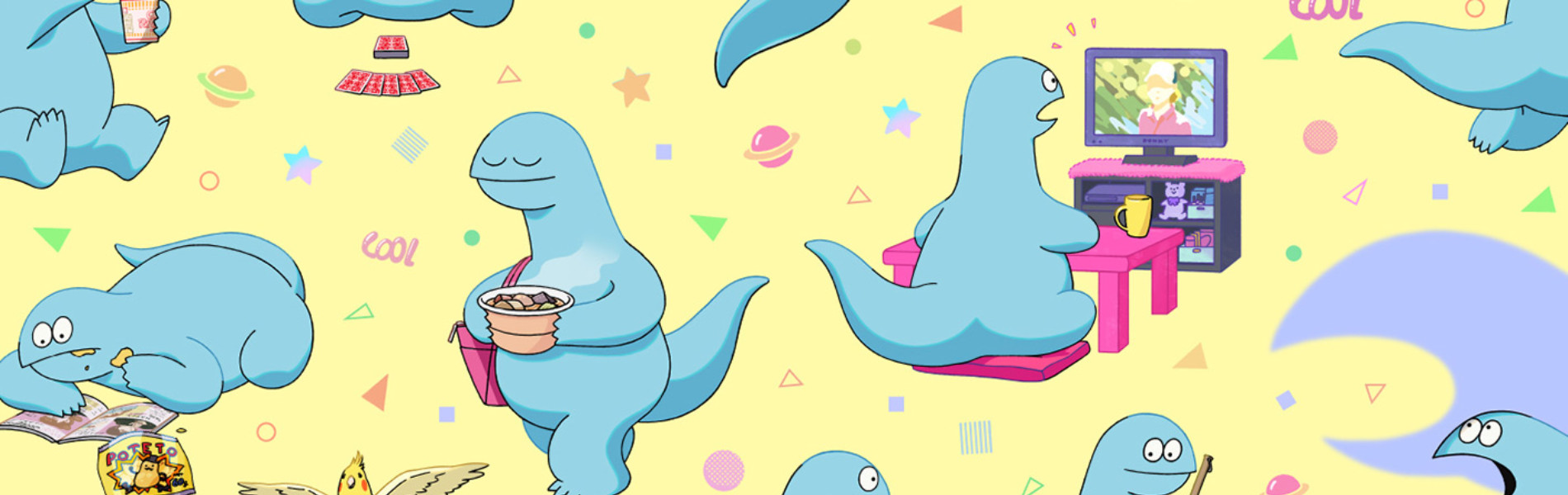
After a night out the gyaru Kaede (Miyuri Shimabukuro) brings home a blue dinosaur! They start living together, vibing through whatever the day bears.
For fans of: Pop Team Epic
Gal to Kyouryuu‘s episodes are split: the first half being glacially paced slice of life chapters enjoying the mundane like binging a TV show with your friend or getting ramen noodles. Its casualty nigh borders into iyashikei territory with kind energy and happy palettes simultaneously playing in and paying no mind to the concepts absurdity.
The second half, where Gal to Kyouryuu becomes live-action — the titular gal now played by an older man —, takes on its own life. Although its begin innocuously rehashes its first half’s energy (now with a cacophony of hilarious MLG-compliation airhorns on cuts) it quickly develops a melodramatic time manipulation story involving some type of death note. How this ties in with a dinosaur moving into a gal’s apartment? No idea. Yet Team Jun Aoki’s dedication to expanding upon such novel idea’s universes tapping into extreme camp is admirable and makes Gal to Kyouryuu the most eccentric pick of the season.
Studio Ajia-Do dir. Yuuta Murano (How Not to Summon a Demon Lord) Original manga by Kouji Kumeta (Sayonara Zetsubou Sensei) Funimation
Popular erotic mangaka Kakushi (Hiroshi Kamiya) goes very extensive lengths to make sure his young, impressionable daughter Hime (Rie Takahashi) doesn’t learn of his profession!
For fans of: Sayonara Zetsubou Sensei, Barakamon
Kakushigoto is at its most hilarious when deviating from its formula: it boasts a captivating side cast, builds upon its running gags, and often cracks meta-jokes about the insufferable mangaka life. Kouji Kumeta’s irregular comedic timing is key; he has no trouble swiftly moving from explosive slapstick to slower jokes, all of them exaggerating our mundane reality. Through its energetic comedy shines a down-to-earth slice of life about a father admirably attempting to understand his clever daughter, leading into its most affecting moments. However, as expected from the author behind Zetsubou-sensei, Kakushigoto‘s episodes take melancholic detours hinting towards an unfavorable conclusion. It further carves its personality with outstanding production values: its background art is delightfully breezy and the star-studded voice cast’s excellent performances bring its simple yet unique character designs to life. Kakushigoto is a complete package and achieves the rare feat of being a seasonal I actually ache weekly for. Watch it now!







:format(jpeg):mode_rgb():quality(90)/discogs-images/R-6776835-1522956464-5539.jpeg.jpg)




 MEGAWATCH


